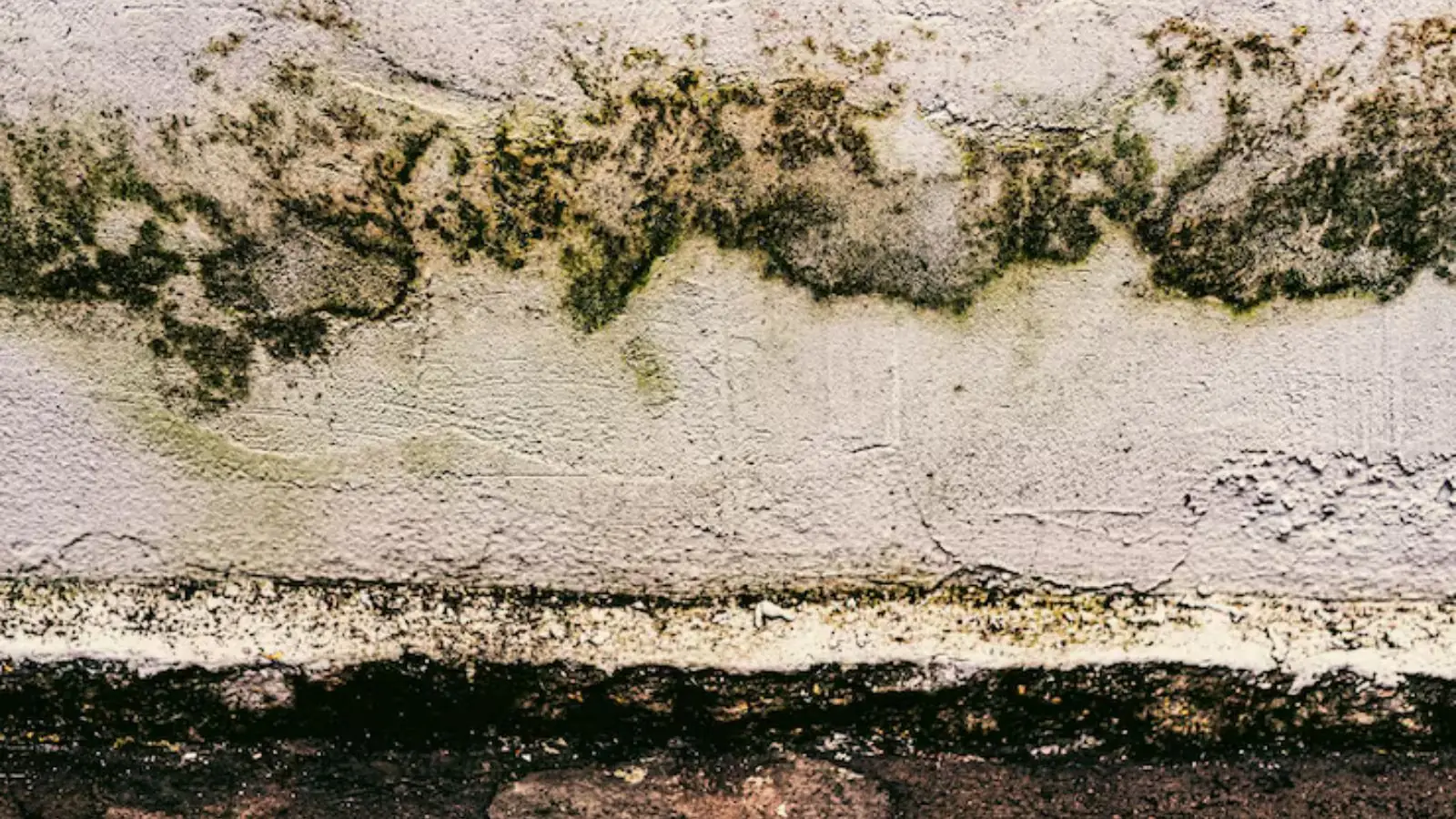
Mold is a type of fungus. It is not a plant and not an animal, and it feeds on organic material such as wood, paper, drywall paper, dust and fabric. It reproduces by releasing microscopic spores that float through air everywhere, indoors and out. Those spores do nothing until they land on something damp. Moisture is the switch. With a source of water, growth can start on damp materials within about 48 hours.
How mold works, in plain terms
A mold colony starts as a spore. When that spore lands on a surface with enough moisture and some organic food, it sends out thread-like strands called hyphae. Those strands spread across and into the material, and the colony then releases its own spores to repeat the cycle. What you see on a wall or ceiling is the visible part of that process.
You cannot get rid of spores in a home, because they come in on shoes, pets, clothing and open windows. That is why the practical goal is never to remove every spore. It is a dry house, where spores have nothing to grow on. Controlling moisture is the one lever that works every time.
What mold needs to grow
Four things have to line up, and most homes always have three of them.
| Requirement | Present in most homes? | What you control |
|---|---|---|
| Spores | Yes, always | Nothing practical |
| Organic food (wood, paper, drywall, dust) | Yes | Choose and dry materials carefully |
| Suitable temperature | Yes, indoor range works | Little |
| Moisture | Only after a leak, condensation or humidity | Fix leaks, dry fast, ventilate |
Moisture is the item that separates a normal home from a mold problem. A bathroom ceiling that is wet every morning, a wall behind a leaking sink or a basement corner with a seeping foundation all supply it. When the water goes away and the material dries, growth stops. Growth that has already happened still has to be removed, but drying is how you stop it spreading.
Where mold hides in a home
Visible spots are the easy ones. The harder cases sit behind surfaces, where a slow leak keeps materials damp without showing.
Under and behind fixtures
Sink traps, supply lines, and washer, dishwasher or refrigerator water lines drip slowly and keep wall cavities and cabinet floors damp.
Ceilings and attics
The back of drywall under an upstairs toilet or tub stays wet unseen. Attic insulation holds roof-leak moisture, and AC condensate lines and drain pans leak into ceilings.
Basements and crawl spaces
Wall bases, sill plates and stored cardboard on a damp floor are common spots after seepage or a past flood.
Behind finishes
Wallpaper, baseboards and carpet pad can hold moisture from an old leak long after the surface looks dry.
A musty smell with no visible source, bubbling paint or a stain that returns after cleaning are all signs that moisture is still present somewhere nearby. A moisture meter and a thermal imaging camera find damp spots without opening the wall.
Mold versus mildew
People use the two words loosely. Mildew generally refers to a flat, powdery or downy growth that sits on the surface of a material, often on shower walls or window sills, and it wipes off more easily. Mold is the broader term and includes colonies that grow into porous materials, and those can look fuzzy, slimy or speckled in black, green, white or other colors.
Color tells you very little. A dark spot does not mean one kind and a pale spot does not mean another. Only sampling by a qualified assessor can identify what is growing, and in most homes the more useful question is how big the affected area is and why it is wet.
What not to do
Do not disturb a large patch by scrubbing or sanding it dry, and never mix cleaning products. Questions about symptoms or health belong with a physician. This guide covers what mold is, not what it does to anyone.
What to do when you find it
Find and stop the water
Look for the source first. A recent toilet, sink, AC condensate line, roof or siding leak is the usual story. Have it repaired before cleaning.
Dry the area
Use air movers and a dehumidifier. Wet drywall and carpet pad often cannot be saved after a couple of days.
Judge the size
A small spot on a hard, sealed surface can be wiped. Anything on drywall, insulation or a patch larger than a palm is a professional call.
Document it
Take dated photos and keep repair receipts. They help with a sale, a loan or an insurance conversation.
Get it assessed when needed
Ask any company whether its crews follow ANSI/IICRC S520, the published standard for mold remediation, and ask whether your state licenses mold work.
Once the leak is fixed and the area dried, mold remediation covers containment, HEPA air scrubbers and removal of material that cannot be cleaned. The drying step itself is water mitigation, and it comes first because wet material grows new mold.
Mold and moisture around Stoneham
Stoneham sits in Middlesex County and includes Spot Pond and a share of the Middlesex Fells Reservation, so some homes sit close to water or low ground. If yours does, it is worth a moisture check of the basement, crawl space and lowest walls after heavy rain, since damp materials are what let mold grow. For flood zones, check the FEMA flood map for your address rather than assuming.
When to call a professional
Call when the area is larger than a palm, the material is soft or sagging, the smell returns after cleaning, or you cannot find the water source. Call too when a buyer or lender wants documented removal, because an independent clearance test after the work is the usual record.
A crew will measure moisture first and explain scope and price before work starts. Neighbors in Melrose and Winchester get the same approach, and you can reach the line at (339) 333-9345.
Frequently asked questions
Is mold a plant?
No. Mold is a fungus, a separate kingdom of living things. It has no leaves or roots and does not make its own food. It digests organic material it grows on, which is why wood, paper and drywall are common hosts, and why it needs moisture to do it.
Does mold always mean a leak?
Not always. Condensation on cold surfaces, a damp basement and a poorly ventilated bathroom can all supply enough moisture without a pipe failing. Either way, moisture is present. Finding where it comes from is the first job, whether the source is a leak or humidity.
Can I tell what kind of mold it is by color?
No. Color varies with the material, the age of the growth and the lighting. Black does not mean one thing and white does not mean another. Sampling by a qualified assessor identifies species, but for most homes the practical decision depends on size and moisture, not species.
How fast does mold grow after a leak?
Mold can start growing on damp materials within about 48 hours. How far it spreads depends on how long the material stays wet. Drying wet drywall, carpet pad and insulation quickly, ideally in the first 24 to 48 hours, gives the best chance of avoiding removal.
Why should I check moisture near Spot Pond or the Fells if I live in Stoneham?
Water near a home or low ground around it can add moisture to a foundation. That does not mean a problem exists. It means a basement or crawl space is worth checking with a moisture meter after wet weather, along with the FEMA flood map for your address.