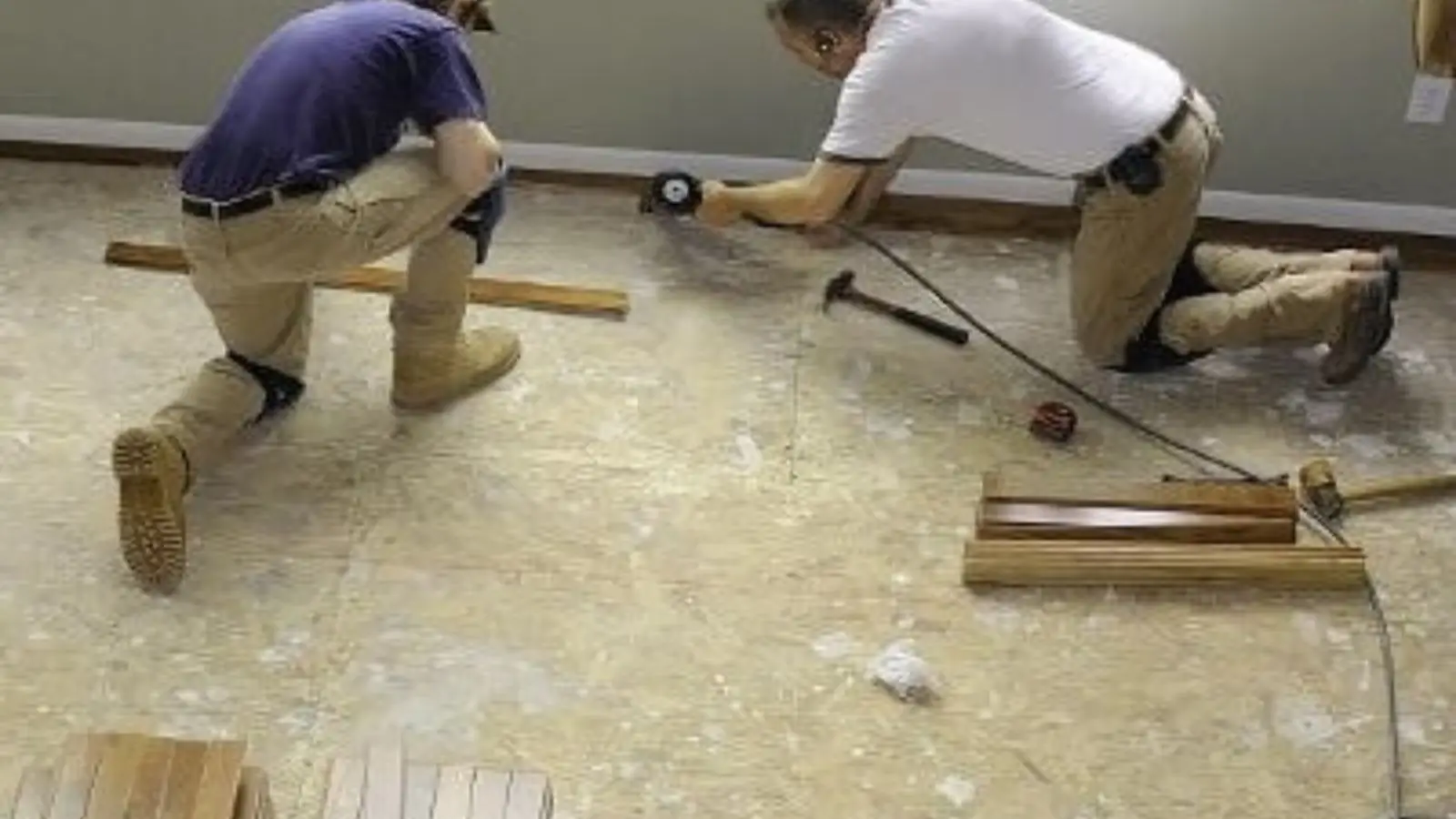
Repairs begin when the readings say the structure is dry. Water damage repair is the rebuild phase: replacing drywall and insulation that could not be saved, laying new flooring, priming, painting, reinstalling trim, and sometimes swapping out cabinet bases. If materials are still wet, the first job is drying, which is covered on our water mitigation page.
Most people want to know two things at this point. What can stay, and what has to come out? The honest answer comes from moisture readings and a look at each material, not from a quick glance at a stain.
Why repairs wait for normal moisture readings
Closing up a wall that still holds moisture is how a small leak turns into a second problem. New drywall over damp studs traps water against wood, and that is where mold gets started. Restoration professionals check studs, subfloor and the back of the wall with a moisture meter and compare them to a dry reference reading from an unaffected part of the house.
A thermal imaging camera helps spot cool, damp pockets that a meter probe might miss. Repairs start once the numbers hold steady over two visits, not on the day the equipment is unplugged.
How scope and price are explained before work starts
A repair quote should never arrive as a single number with nothing behind it. The process starts with a walk-through of every affected room, with the homeowner present when possible. The crew notes what is wet, what is stained, what is damaged beyond repair, and what is simply dirty.
Next come the readings. A moisture meter gives numbers for each material, and the thermal camera shows where water traveled. Those findings go into a written scope: each room, each material, what gets removed, what gets rebuilt, and what finish is planned. You see that scope and the reasoning behind it before anyone cuts a single piece of drywall.
Size of the affected area
More wall length, more floor area and more ceiling means more material and more labor hours. One wet corner and a whole wet floor are different jobs.
Materials involved
Carpet pad, hardwood, tile, plaster and drywall all behave differently. Older materials take longer to match.
Water category
Clean supply line water (Category 1) leaves more salvageable material than Category 2 or 3 water, where porous materials are usually removed.
Drying history
Several days of air movers and LGR dehumidifiers affects what survived, and so the repair scope.
Finish level
Paint-only touch-ups, full-room repainting, custom trim and cabinet work all change the rebuild scope. Matching an existing finish can take extra steps.
Insurance is a separate conversation. Sudden and accidental water damage is often covered, while gradual leaks and neglect often are not, so check your policy or ask your insurer how your loss is classified. Ready for your real number? Call (339) 333-9345 and describe what got wet.
Repair or replace: a material-by-material guide
This table shows how crews usually judge each material. Treat it as a starting point.
| Material | Usually dried and kept when | Usually replaced when |
|---|---|---|
| Drywall | Wet briefly from clean water, still firm, no sagging or staining | Sagging, crumbling, swollen at the bottom edge, or soaked by Category 2 or 3 water |
| Batt insulation | Dry fiberglass touched only by a short, clean leak | Compressed, stained or holding water, since it will not shed moisture on its own |
| Carpet | Clean water, caught early, backing intact | Contaminated water, or wet long enough to smell or delaminate |
| Solid hardwood | Slight cupping that flattens as the floor dries | Boards have buckled, split, or stayed cupped after drying |
| Laminate and engineered wood | Surface-only moisture removed within hours | Edges swollen or seams lifting, which does not reverse |
| Baseboard and trim | Painted wood that dries flat and clean | Warped, stained through, or finished with soft MDF that swelled |
| Cabinet bases | Solid wood or plywood that dries sound | Particleboard that has swollen, delaminated or crumbled |
Ceiling and wall water damage repair
A ceiling that sags, bubbles or shows a brown ring is telling you water got into the cavity above it. The source may be a roof leak or an upstairs fixture. Find and stop the leak first, because new drywall will stain again if the source is still active.
If a ceiling is sagging, stay out from under it. Water pooled in the drywall can bring down a section without warning, and a small hole can release a surprising amount of water. Restoration professionals cut out the wet drywall along clean lines, remove wet insulation, and let the framing dry fully with air movers and a dehumidifier.
Patching follows drying. The new drywall is taped, mudded and sanded, and then primed with a stain-blocking primer before any paint goes on. Painting straight over a water stain does not fix it. The tannins and minerals bleed through ordinary paint, and the underlying drywall may still be damp or damaged. Removing wet drywall and insulation is what actually ends the problem, and it also reduces the chance of mold, which our mold remediation page explains.
Hardwood floor cupping and drying
Cupping happens when the underside of a board absorbs more moisture than the top, so the edges rise higher than the center. It often shows up a few days after a leak or a washer overflow. Solid hardwood can look alarming even when the damage is mild.
Many cupped floors flatten as they dry. Specialty floor drying mats and controlled airflow pull moisture out of boards and subfloor, and it can take days or even weeks for the floor to settle. Sanding or refinishing too early traps that movement, so it waits for stable readings.
Boards are replaced when they have buckled off the subfloor, split along seams, or stayed cupped after full drying. Replacement is also likely when water sat for a long time or came from a contaminated source. Matching new boards to an old floor often means refinishing a larger area for a consistent look.
Finish matching, paint and trim
Old paint fades, so a fresh patch can look off even in the right shade. The usual fix is painting the whole wall corner to corner. Stained or older trim profiles may need to be sourced or milled to match, so ask early which finishes are matched and which are replaced.
Permits and inspections in Stoneham
The town's Building Department at 35 Central Street accepts permit applications through its online portal and asks that you call the office for inspections. The town page does not say when a permit is needed for water damage repair, so ask the Building Department before a larger rebuild such as new framing or electrical work.
Before repairs start: what to do and check
Safety first: stay out of any room with a sagging ceiling, and shut off power to wet circuits only if you can reach the panel while dry.
Ask for the final moisture readings in writing and confirm they match normal levels for each material. Keep your photos, the drying log and every receipt for your insurer. Ask the town Building Department whether your project needs a permit before walls are closed, since its page does not say. Do not paint over a stain until the cause is fixed and the area is dry.
Frequently asked questions
How long after drying does repair begin?
Repair begins once moisture readings in studs, subfloor and drywall return to the normal range, usually confirmed across two readings. The gap depends on how wet things got and how long drying took.
Can you just paint over a water stain on the ceiling?
Painting over a stain usually fails, because tannins and minerals bleed through ordinary paint and the drywall may still be wet or weak underneath. The proper fix is to dry the area, replace damaged drywall if needed, and apply a stain-blocking primer before the finish coat.
Will my hardwood floor need to be replaced?
Not always. Mild cupping often flattens as the boards dry, which can take days to weeks. Boards that have buckled, split or stayed cupped after full drying are usually replaced. Readings and a look at the subfloor tell the story.
Why can't new paint match the old walls exactly?
Existing paint fades with light and age, so a patch can stand out even when the color is correct. Painting the full wall corner to corner is the most reliable fix.
Does water damage repair include fixing the leak?
Restoration covers drying and rebuilding, not plumbing or roofing. A plumber or roofer fixes the source before repairs begin, or new materials will get wet again.
How is repair priced?
Price depends on the size of the affected area, the materials, the water category, how long drying took and the finish level you want. A written scope is explained before work starts, so you can see what is included and why.
Rebuilding with licensed and insured professionals
Repair work should be handled by licensed and insured restoration professionals who can explain each step in plain terms. Ask any company whether its crews follow ANSI/IICRC S500, the published standard for professional water damage restoration, because it describes how drying is verified before rebuilding.
Our water damage cleanup page shows how cleanup connects to the rebuild, and the flood damage restoration page covers Category 3 losses where more materials come out. Neighbors a few miles away can read about water damage restoration in Winchester too. To get your scope and price explained before any work begins, call (339) 333-9345.