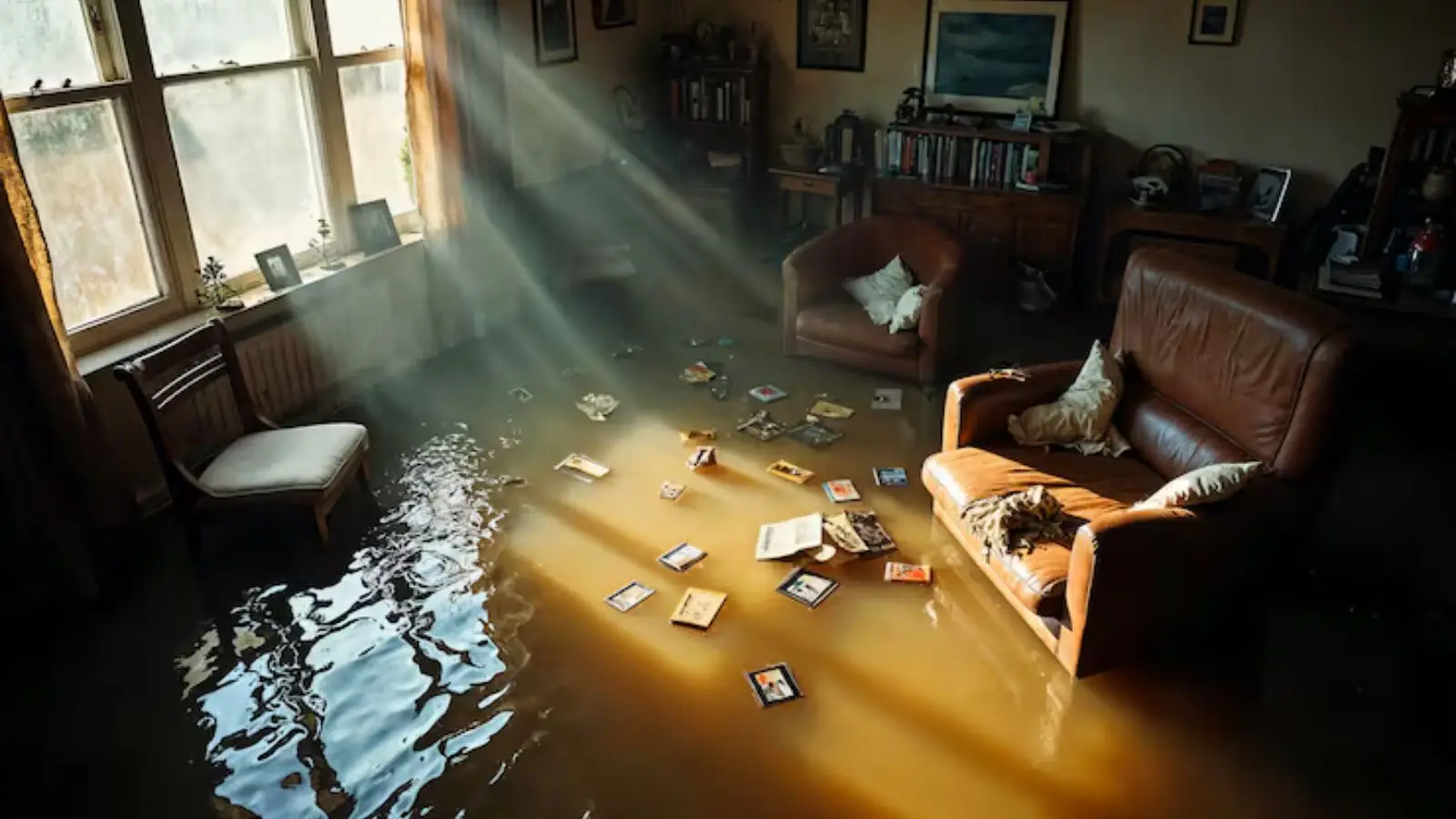
If water is coming into your house, every hour matters, and our dispatch line answers 24/7. Call the dispatch line and describe what you see, then use the minutes while you wait to keep yourself and your belongings safe. Floodwater picks up soil, bacteria and chemicals as it moves, so the sooner it is pumped out and the structure is drying, the less gets ruined.
Flooding comes from a few directions: heavy storm runoff, a rising river or brook, groundwater pushing up through a slab, or a sewer line that backs up. Each one carries a different level of contamination, and that decides what can be saved.
Flooding right now: what to do while you wait
Your safety comes before your belongings. Floodwater and electricity are a deadly mix, and a basement can look calm while an outlet under the surface is live.
Stay out of the water
Stay out if any outlet, appliance, cord or the electrical panel could be touched by it. Call the utility or 911 for any electrical or gas risk before you call the restoration line.
Cut power only if dry
Shut off power only if you can reach the panel without stepping in water.
Move and photograph
Move furniture, electronics, papers and valuables to dry, higher ground, and photograph the damage for your records.
Keep clear
Do not use a household vacuum, do not wade in sewage-contaminated water, and keep children and pets away.
How scope and price are explained before work starts
When the crew arrives, the first step is a walk-through of every wet area, including spaces that look dry. They take moisture meter readings of drywall, framing and subfloor, and use a thermal imaging camera to see where the water traveled behind walls. Then they identify the water category, because it determines what must be removed.
Everything goes into a written scope: rooms affected, materials to remove, the equipment planned, and the expected drying period. You see it, and the reasoning, before work starts. After-hours and weekend calls get the same process, with same-day response when available.
Water category
Category 1 is clean supply water. Category 2 is gray water. Category 3 is sewage or river and storm floodwater. Higher categories mean more removal and more sanitizing.
Depth and area
A few inches across one room and a foot across a whole basement need different pumping and different drying plans.
Materials affected
Carpet, drywall, insulation and framing respond differently. Porous materials in Category 3 water are usually discarded.
Drying days and equipment
Air movers, LGR dehumidifiers and sometimes drying mats run for days. The more equipment and days, the higher the cost.
Rebuild scope
What comes out must go back. Rebuilding is a separate phase, covered on our water damage repair page.
Flood damage is usually excluded from standard homeowners policies and needs separate flood coverage, so ask your insurer what yours includes. Sudden and accidental water losses from a burst pipe are treated differently, so check your policy. Your real number depends on your scope, so call (339) 333-9345 to get it.
Flood water categories and what they mean for your materials
| Category | Typical source | What it means for porous materials |
|---|---|---|
| Category 1 | Broken supply line, clean tub or sink overflow | Often dried in place if caught within the first day or two, including carpet and drywall |
| Category 2 | Washer or dishwasher discharge, sump pump failure, some groundwater seepage | Carpet pad and soft materials are usually removed, while some structural materials can be cleaned and dried |
| Category 3 | Sewage, river or storm flooding, long-standing water | Carpet, pad, insulation and drywall are usually removed and discarded, and hard surfaces are sanitized |
Clean water that sits for more than 48 hours in a warm basement may be treated as Category 2 or worse.
Basement flooding cleanup
Basements take the worst of storm and groundwater flooding because water finds its way to the lowest point. The first job is extraction. Truck-mounted or portable extraction units and submersible pumps remove standing water, usually before anything else can start.
Once the water is out, the crew removes saturated carpet, pad and the lower section of drywall, since water wicks several inches above the waterline. Wet insulation comes out as well. The concrete slab and framing stay, and they dry with air movers and LGR dehumidifiers running for several days.
Moisture meters track progress, and drying is complete only when readings match a dry reference. Mold can start growing on damp materials in about 48 hours, so speed matters, and our water mitigation page explains the drying process in more detail.
Restoration is not basement waterproofing. If water keeps entering through a foundation crack or poor grading, a waterproofing contractor handles the fix. Same-day and after-hours calls are welcome, and the sooner the pumping starts, the less comes out of the house.
Sewage backup cleanup
Raw sewage is Category 3 water and a genuine health hazard. Stay out of the area. Do not enter if the water covers outlets or the panel, and call the utility or 911 for any electrical or gas risk before calling the restoration line. Cut power only if you can reach the panel while dry.
Crews wear PPE: waders, gloves, boots, eye protection and respirators. They extract the contaminated water, then discard porous materials that soaked it up, including carpet, pad, insulation and drywall. Non-porous surfaces are cleaned and then sanitized with an antimicrobial treatment. HEPA air scrubbers may run to clean the air during the work.
If the backup comes from the town main and not your own line, report it. Stoneham's Public Works Water/Sewer Department maintains about 75 miles of sewer and 5 sewer pumping stations, and after business hours the town directs emergencies to the Stoneham Police Department line. A plumber handles a blockage in your own lateral.
Crawl space and whole-house flooding
A crawl space with standing water often goes unnoticed because nobody looks. Moisture rises into floor joists and subflooring, insulation sags, and musty air makes its way upstairs. Crews pump the water, remove wet insulation and dry the space with air movers and dehumidifiers. Whole-house flooding follows the same steps room by room. Our emergency water removal page covers the pumping phase for any size loss.
Flood zones around Stoneham
Whether your address sits in a flood zone is a factual question for the map, not a guess. Check the FEMA flood map for your address, because it affects whether you need separate flood coverage and how you assess future risk. The Wakefield water damage page is useful if you live near the border.
Frequently asked questions
Do you handle flood damage restoration emergencies at night or on weekends in Stoneham?
Yes. Dispatch is available around the clock, including nights, weekends and holidays, and same-day response is offered when available. Call and describe what is happening. No arrival time is promised on the phone, but you will get a clear idea of next steps.
Is flood restoration the same as basement waterproofing?
No. Restoration removes water, dries the structure and cleans up damage. Waterproofing stops future water from entering through foundation cracks, drainage or grading. A waterproofing contractor handles those fixes.
Does homeowners insurance cover flood damage?
Flood damage is usually excluded from standard homeowners policies and needs separate flood coverage. Sudden and accidental losses like a burst pipe are treated differently. Check your policy and ask your insurer what applies. Photographs and a list of damaged items help any claim.
What is the difference between Category 2 and Category 3 water?
Category 2 water, such as washer discharge or sump failure, has some contamination. Category 3 is grossly contaminated and includes sewage and river or storm floodwater. Category 3 usually means porous materials are removed and discarded rather than dried.
Can I clean up a flooded basement myself?
Small clean-water spills can be handled by a homeowner. Larger floods, sewage or anything near electricity should go to professionals. Wet drywall and insulation hold moisture, and without moisture meters it is hard to know when things are truly dry.
How do I know if my address is in a flood zone?
Check the FEMA flood map for your address. Flood zone status affects whether you may need flood coverage. Your insurer or the town can also help you read the map.
Licensed and insured restoration professionals
Flood work should be done by licensed and insured restoration professionals. Ask any company whether its crews follow ANSI/IICRC S500, the published standard for professional water damage restoration, which covers water categories, drying goals and safe handling of contaminated water.
If flooding in your home has left you with a drying problem and a mold concern, our mold remediation page explains the next step. Water in your house right now? Call (339) 333-9345 any hour.