You found water where it should not be, and every hour it sits, it moves deeper into the materials around it. Our dispatch line is open 24/7, so call whenever you find it. While you wait, stop the source if you can and shut the main water valve. Cut power to the wet areas only if you can reach the panel while dry.
Lift valuables off the floor and keep people and pets out of any water that may be contaminated.
Water mitigation is the first phase of restoration. It does not rebuild anything. Its only job is to stop the damage from growing, and that work is most effective in the first 24 to 72 hours. Same-day response is available when a crew is open, and calls that come in overnight or on a weekend get the same attention as a Tuesday morning.
My wall feels damp or my carpet is soaking. What now?
A wall that feels cool and slightly soft, or carpet that squishes underfoot, means water has already moved past the visible spot. Drywall wicks moisture upward like a paper towel, so the stain you see is usually smaller than the wet area behind it. The trade name for the work that handles this is water mitigation: finding the water, removing what can be removed, and drying the structure before it starts to break down.
Water still spreading? Start here
If water is actively running, the order matters. Stop the source first, whether that is a supply line, a washer hose or a failed fitting. Then close the main shut-off valve, which is usually where the water line enters the house, often in a basement, utility room or garage.
Next, deal with power. Never step into standing water near outlets, cords or a panel. If the panel is reachable while the floor around it is dry, switch off the breakers for the wet rooms only. For any sign of sparking, buzzing, a gas smell or a flooded panel, leave, then call the utility or 911 before calling us.
Photograph everything before you move it, because those photos help if you file a claim.
What happens in the first 72 hours
Mitigation follows a sequence. Each window has a purpose, and skipping ahead tends to leave wet materials behind.
| Window | What is happening | What you can do |
|---|---|---|
| First hour | Source is stopped and the main valve is closed. Dispatch gathers details about what is wet. | Shut off water, protect valuables, take photos, keep people out of dirty water. |
| Hours 1 to 6 | Crew arrives when available, assesses the damage and starts extraction with pumps or extraction units. | Clear a path, move small items, tell the crew where the water started. |
| Hours 6 to 24 | Moisture meters and a thermal imaging camera map wet areas. Wet pad, insulation and loose baseboard may be removed. | Stay out of sealed work zones, note what was removed. |
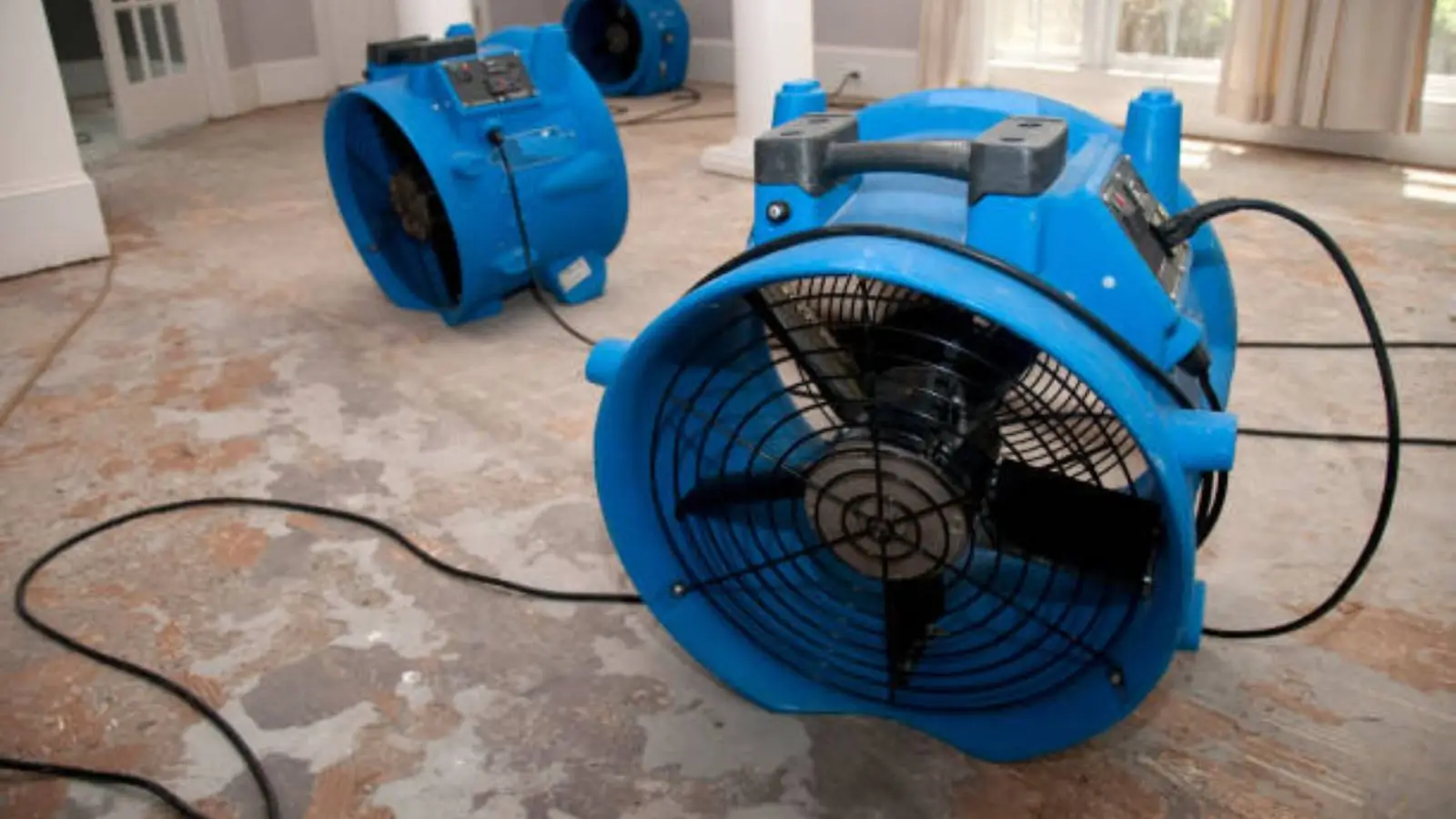
| Hours 24 to 48 | Air movers and LGR dehumidifiers are placed and running. Containment goes up where needed. | Keep equipment plugged in and doors closed, avoid turning it off. |
| Hours 48 to 72 | Readings are checked again and equipment is repositioned to chase remaining moisture. | Ask for the readings, report new stains or smells. |
Structural drying
Structural drying removes water that is no longer visible. It goes into subfloors, wall cavities, framing, cabinet bases and the back of drywall, and none of that dries by itself in a reasonable time. A crew starts by taking readings with moisture meters, then sweeps with a thermal imaging camera, which shows cool, wet areas behind finished surfaces. Those readings become a moisture map of the home.
Air movers push dry air across wet surfaces so moisture leaves the material. LGR dehumidifiers pull that moisture out of the air so it does not settle somewhere else. Together they work as a closed loop, which is why doors and windows stay shut during the job.
Each material has a drying goal, set by comparing readings from wet areas against an unaffected area of the same material. Typical drying takes several days, and thick framing, hardwood and plaster take longer than carpet or drywall. The equipment stays on site and is checked every visit with moisture meter readings, so you see numbers moving toward the goal before anything comes out.
How scope and price are explained before work starts
Before any equipment is set, a crew walks the affected areas with you. That walk-through covers where the water came from, how far it traveled and which rooms are involved. Moisture readings back up what they see, so the plan is based on measurements and not a guess.
You then get a written scope that lists what will be extracted, removed, dried and monitored. Price comes from that scope, and the crew can explain each line. If readings show more water than expected, the plan changes only after that conversation.
What drives the cost
Water category
Category 1 comes from clean supply lines, category 2 has some contamination, and category 3 is sewage or floodwater. Higher categories mean more removal and protective work.
Affected area
Square footage and the number of rooms or floors involved change the labor and equipment needed.
Materials
Carpet, hardwood, tile, drywall and plaster each dry and fail differently.
Drying days and equipment
More air movers and LGR dehumidifiers running for more days adds to the total.
Rebuild scope
Mitigation ends when the structure is dry, and any repairs are a separate phase.
Sudden and accidental water damage is often covered by homeowner policies, gradual leaks and neglect often are not, and flood damage is usually excluded without separate flood coverage. Check your policy or ask your insurer. To get your real number for your home, call (339) 333-9345 and describe what you see.
Where mitigation fits with the rest of the job
Mitigation comes first, then water damage cleanup handles contaminated materials, sanitizing and odor. If standing water is the main problem, emergency water removal starts the pumping right away. Once everything reads dry, water damage repair covers the rebuild.
Restoration is not basement waterproofing. We dry and repair what water has already damaged, but we do not regrade a yard, seal foundation walls or fix a drainage problem.
A note for Stoneham homes
Stoneham is served by the MWRA water system, which means a broken supply line carries pressurized water until the main valve is closed. Find your valve now, before you need it, and label it. If the valve will not turn or the water is coming from the street side of your meter, the town's Public Works Water/Sewer Department is who to call.
Frequently asked questions
Do you handle water mitigation emergencies at night or on weekends in Stoneham?
Yes. Dispatch is answered around the clock, including nights, weekends and holidays. Call, say what is wet and where the water came from, and you will get instructions for the first steps while a crew is arranged. Same-day response is available when a crew is open, and we do not promise a set arrival time, because that depends on conditions and call volume.
The floor is wet and I do not know where the water came from. What should I do?
Shut off the main water valve first, since that rules out a pressurized supply line. Then check the usual suspects: the water heater, washer hoses, dishwasher, under-sink lines and the ceiling above. If the water keeps appearing after the main is closed, it may be groundwater or a drain backup. Photograph the wet area and call so a crew can use moisture meters to trace it.
How long do air movers and dehumidifiers need to run?
Most jobs take several days of drying, depending on the materials and how far the water traveled. Carpet and drywall dry faster, while hardwood, plaster and framing take longer. The equipment is checked with moisture meter readings at each visit, and it comes out only when the materials reach their drying goal.
Can mold start before the drying is finished?
Mold needs moisture, and it can start growing on damp materials within about 48 hours. That is why mitigation moves quickly and why wet materials that cannot be dried get removed. If you already see or smell mold, mention it when you call, since mold is handled as its own job once the water is controlled.
Local help you can ask about
Crews serve Stoneham and nearby towns, including jobs near Wakefield and Winchester. Mitigation crews are licensed and insured restoration professionals. Drying goals and moisture documentation are covered by ANSI/IICRC S500, the published standard, and it is fair to ask who on the crew works to it. A reputable one will answer plainly.