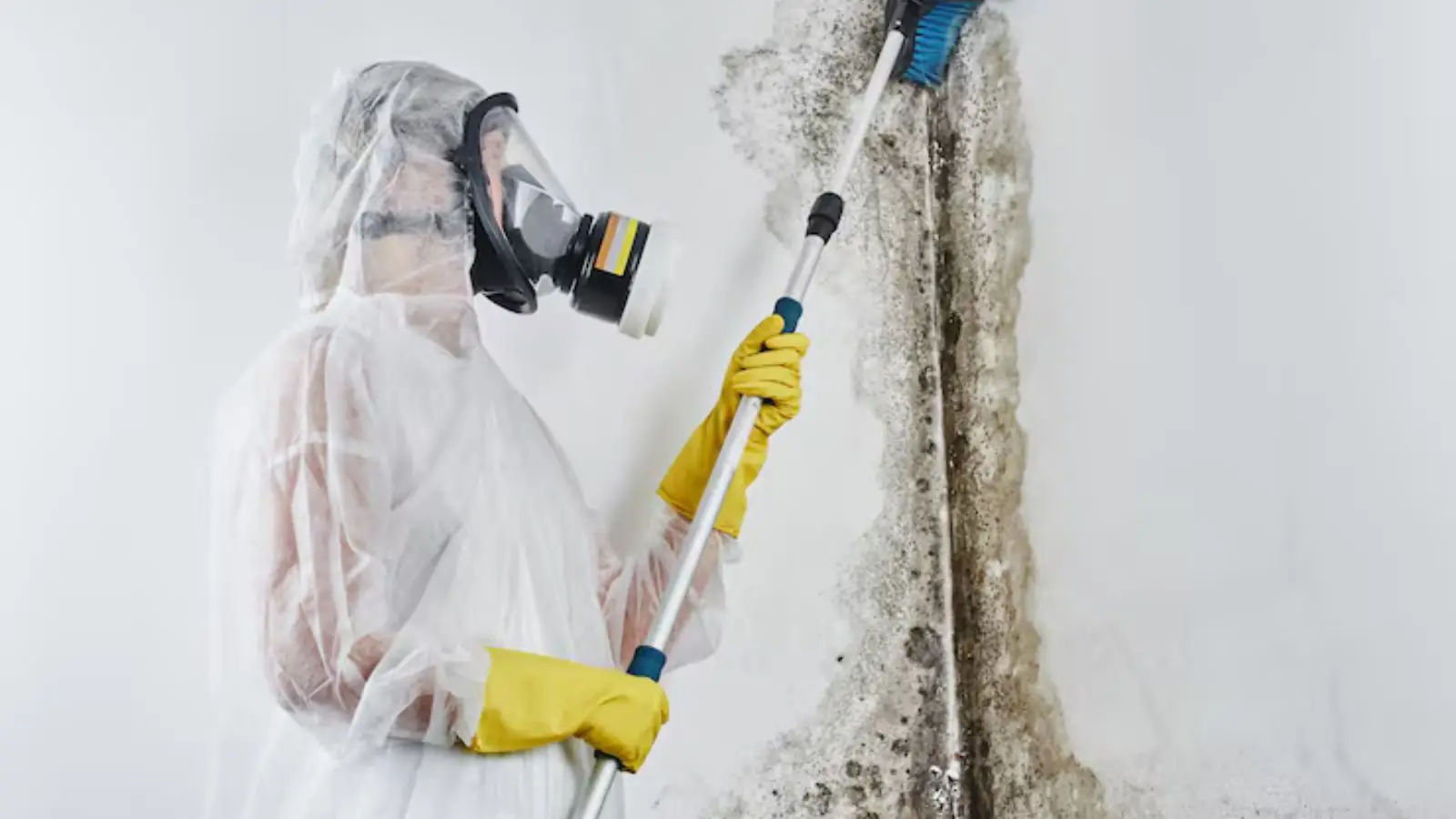
Most mold calls start the same way. A toilet supply line wept for weeks, an AC condensate line backed up into a closet, a roof or siding leak soaked an exterior wall, and now something smells wrong or a patch of wall looks dark. Mold remediation is the controlled removal of that growth, together with the damp materials feeding it.
Mold does not grow without moisture, so the first job is always the source. The leak gets fixed before anyone starts cleaning, or the growth simply returns to the damp spot.
Musty smell in the basement or dark spots on a ceiling after a leak?
A musty smell that lingers in a basement, or dark spots spreading on a ceiling below a bathroom or roofline, usually points to hidden moisture. Visible spots are often only the surface of a larger problem inside the wall or above the drywall. This is where mold remediation comes in: finding the damp source, containing the affected area, and removing the growth and the materials it has colonized.
How scope and price are explained before work starts
Pricing for mold work should never be a mystery. It starts with a walk-through of the visible growth and the rooms around it, along with questions about the leak that caused it. Moisture meters read drywall and framing, and a thermal imaging camera shows cool, damp areas behind surfaces that look fine.
From those findings, you get a written scope: which areas are contained, which materials are removed, how the air will be filtered, and what the final inspection looks like. You see that scope before work starts, and you can ask why each item is there.
Size of the affected area
A single patch behind a toilet and growth across several rooms are very different jobs in labor and materials.
Porous materials involved
Drywall, insulation, carpet and ceiling tile that carry growth are usually removed. Framing and concrete can often be cleaned.
Containment and air filtration
Plastic containment barriers, negative air machines and HEPA air scrubbers add setup time and equipment days.
Hidden moisture
If the source is still damp, drying is part of the plan, including air movers and LGR dehumidifiers.
Rebuild after removal
Anything cut out has to be replaced later, and that repair scope is priced separately.
Coverage depends on how the water got there. Sudden and accidental water damage is often covered, while gradual leaks and neglect often are not, so check your policy or ask your insurer. To get your real number, call (339) 333-9345 and describe the leak and where the growth is.
Mold after water damage
Mold needs three things: spores, which are always present, a food source such as drywall paper or wood, and moisture. Remove the moisture and growth stops. That is why a leak is the beginning of the story, not the end of it. Mold can start growing on damp materials within about 48 hours, and a slow leak inside a wall can feed it for weeks without anyone noticing.
Fast, thorough drying is the best way to prevent that. Air movers and LGR dehumidifiers pull moisture out of drywall, framing and subfloor, and moisture meters confirm when readings return to normal. Our water mitigation page walks through that process.
If drying was delayed or the leak was hidden, growth may already be present. The two jobs then overlap: stop the moisture, then remove the damage. Flooded basements are a common example, and the flood damage restoration page explains how those losses start.
Mold removal and black mold cleanup
Remediation begins with containment. Crews hang plastic sheeting around the work area and seal it, then run a negative air machine so air flows into the containment and out through HEPA filtration, keeping spores from drifting into the rest of the house. HEPA air scrubbers keep cleaning the air for the duration of the work.
Porous materials with growth, such as drywall, insulation, carpet and ceiling tile, are cut out, bagged and removed. These cannot be reliably cleaned. Non-porous and semi-porous surfaces such as framing, concrete and metal are cleaned with HEPA vacuums and wiped down, and sometimes lightly abraded to remove growth.
Black mold is a common name for dark-colored growth, and the removal approach is the same. The color alone does not tell you what species it is, and testing is how you find out. Nobody can promise that mold will not return. The only reliable protection is keeping the area dry and fixing leaks quickly.
| Situation | Small surface spot | Larger or hidden growth |
|---|---|---|
| Typical example | A few spots on a bathroom ceiling or window frame | Growth behind drywall, under flooring or across several rooms |
| Do-it-yourself wipe-down | Often reasonable, once the moisture source is fixed | Not suitable, since scrubbing can spread spores |
| Containment needed | Usually not | Yes, with barriers and negative air |
| Materials | Surface cleaned | Porous materials removed and bagged |
| Air filtration | Ordinary ventilation | HEPA air scrubbers during the work |
| Verification | Visual check | Independent clearance inspection is common |
Mold testing and independent clearance inspection
Mold testing means taking samples, either air samples or surface samples, and sending them to a lab to see what is present and in what amount. Testing can help when growth is hidden, when someone wants a baseline, or when you need documentation after the work.
Post-remediation verification is a separate step. An independent party, with no stake in the cleanup, inspects the area after the work and may collect samples to compare to a baseline. That independence matters because the company that did the removal should not grade its own work. ANSI/IICRC S520, the published standard for professional mold remediation, describes how remediation and verification are approached.
Ask any company you hire whether its crews follow S520 and whether it recommends independent verification. A written clearance report is a record you can keep.
Start with the leak that fed it
Callers usually describe a recent leak from an upstairs toilet, a sink supply line, an AC condensate line, or a roof or siding failure. Whatever the source, a plumber, HVAC technician or roofer fixes it first. Cleaning mold off a wall that is still getting wet is wasted effort.
Once the area is stable, rebuilding follows. New drywall, insulation and paint are covered on our water damage repair page. If you live near the city line, neighbors in Melrose and Medford can read about service in their own areas too.
Before you call about mold
Find and stop the water source first, because mold needs moisture. Photograph the affected area and note the date. Keep the room's door closed if you can, and do not sand, scrape or brush the spot, which spreads material. Keep wet items out of living areas and leave HVAC vents in that area alone until a crew has looked. Questions about symptoms belong with a physician.
Frequently asked questions
Why does my basement smell musty even though I see no mold?
A musty smell usually means moisture is present somewhere, often in a hidden space such as inside a wall or under flooring. Mold may be growing out of sight. A moisture meter and thermal imaging camera can locate damp areas, and mold remediation addresses any growth found.
Will a lender or buyer require mold clearance for a home sale or loan?
It varies. Lender requirements differ, and some ask for documentation that mold was removed and the area passed an independent inspection. Ask your lender or the buyer's lender what they require. No result can be promised in advance, and the documents needed depend on the lender.
Does my state license mold work?
Rules differ by state. Ask whether your state licenses mold work, and ask any company you are considering to show you licensing and insurance that apply. Licensed and insured restoration professionals should be willing to explain both.
Can I just clean mold off with bleach or vinegar?
For a small surface spot on a hard, non-porous surface, a careful wipe-down can be reasonable once the moisture is fixed. Larger or hidden growth should not be scrubbed or disturbed, since that can spread spores into the rest of the house.
What happens after the mold is removed?
The area is dried, cleaned and often inspected. An independent clearance inspection may include sampling. Once it passes, rebuilding begins. Keep humidity and leaks under control afterward, since mold returns where moisture does.
Is mold in my house making me sick?
Health questions belong to a physician. A restoration company can find and remove growth, but it cannot diagnose symptoms or tell you what a particular exposure means for you. Talk to your doctor about any health concerns.
Licensed and insured professionals, standards you can ask about
Mold remediation should be done by licensed and insured restoration professionals who can explain containment, removal and verification in plain terms. Ask any company whether its crews work to ANSI/IICRC S520, and request the scope in writing. When you are ready for a plan, call (339) 333-9345 and describe what you are seeing.