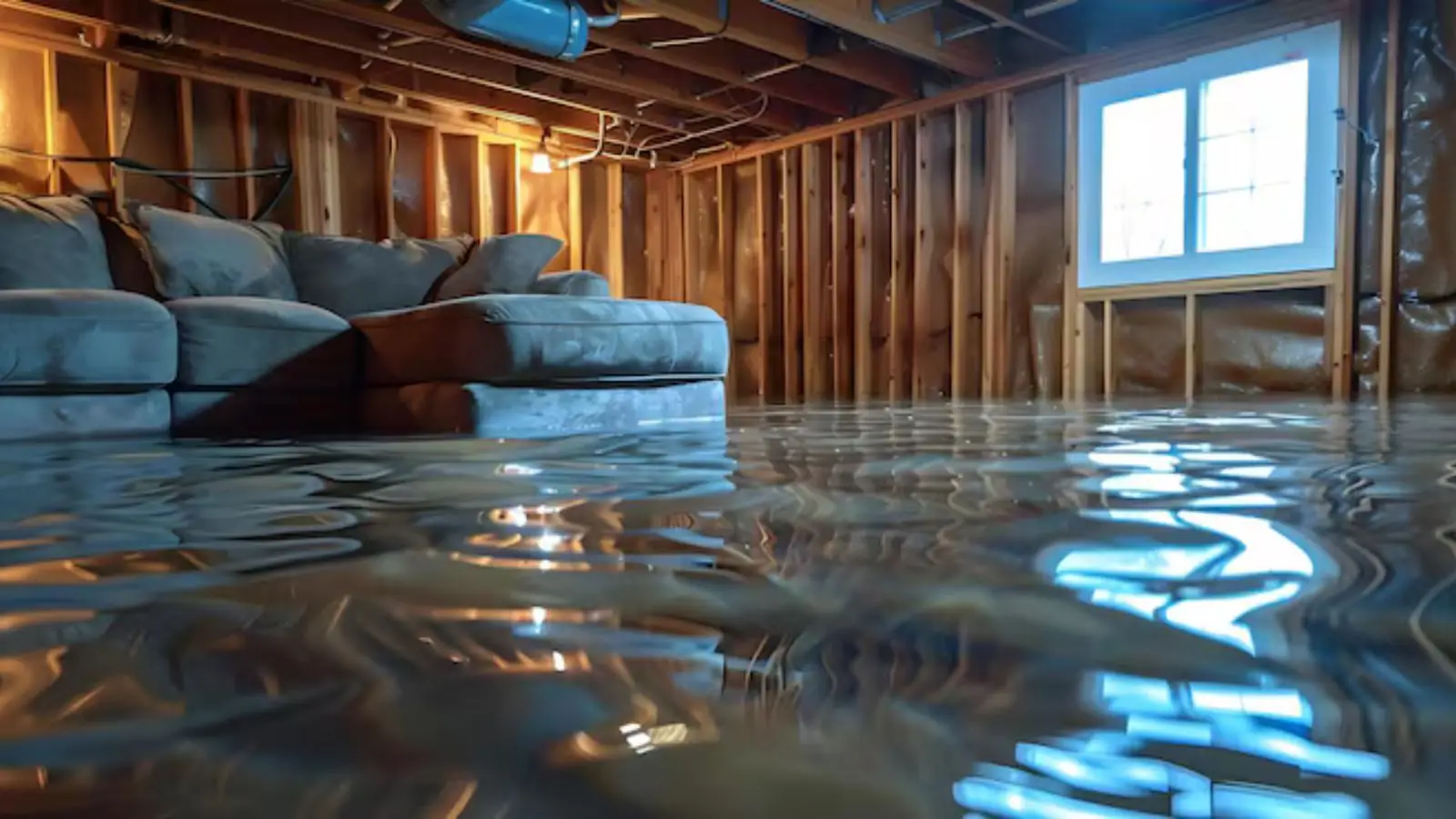
Start with safety, then the source. If water is near outlets, the panel, a furnace or a water heater, stay out and call the utility or 911 first. If the room is safe, find where the water is coming from, stop it if you can, photograph everything, and move dry items up and out. Then call a restoration company, because wet materials start to turn within 24 to 48 hours.
Step one: decide if you can walk in
Standing water and electricity do not mix. If water reaches an outlet, a power strip, a sump pump cord or the base of the electrical panel, do not wade in. Shut off power only if you can reach the panel while standing on dry ground. If you cannot, call the utility or 911 for any electrical or gas risk before you call the restoration line.
A gas smell means you leave the house and call from outside. A sewage smell means the water may be contaminated, so keep hands, children and pets away from it.
Safety first
Never touch a wet appliance, cord or outlet. If you are unsure, stay upstairs and make the calls from there.
Step two: work out where the water came from
The source tells you what to do next, and it also tells you how contaminated the water might be. Clean supply water from a broken pipe is one thing. Groundwater that seeped through a wall is another. Water that rose from a floor drain is a third, and it needs the most caution.
| What you see | Likely source | First move |
|---|---|---|
| Spraying or steady flow near the water heater, washer hose or a pipe | Supply line leak | Close the nearest shut-off valve, or the main valve if you cannot find it |
| Water pooling along one wall after rain, with a damp stripe on the concrete | Groundwater through the foundation | Clear gutters and downspouts outside, then document and start drying |
| Sump pit full or pump silent | Pump failure or power loss | Check the breaker, do not stand in water to test it, and call for water removal |
| Gray or brown water rising from a floor drain, with an odor | Sewer or drain backup | Stop using sinks, toilets and the washer, keep everyone out, and treat it as contaminated |
| Drips from the ceiling under a bathroom or kitchen | Leak from the floor above | Shut off water to that fixture and put a bucket under the drip |
Step three: stop more water coming in
If the source is a supply line, closing the valve is the single most useful thing you can do. Know where your main shut-off is before you need it. If you cannot find a local valve, the main is usually near where the water line enters the house.
If it is groundwater or a failed pump, you usually cannot stop it yourself, so leave the rest to a crew with extraction units.
What to move, what to photograph
Take photos and video before you move anything. Insurers and adjusters want to see the water line on walls, the condition of contents, and the source. Wide shots first, then close-ups, then one shot of any visible label on damaged equipment.
Then move things. Work from the top of a pile down so you do not drag wet cardboard through standing water.
Lift valuables
Electronics, papers and photographs go to a dry floor upstairs.
Raise furniture
Pull legs off wet carpet and put foil or plastic under them.
Dry rugs outside
Take wet area rugs to a garage or outdoors to dry flat.
Leave the soaked materials
Drywall, insulation and carpet pad stay put so crews can measure them.
Keep damaged items
Photograph them first, and talk to your insurer before discarding if a claim is open.
What dries and what does not
Water category and time decide what is salvageable. Category 1 water, from a clean supply line, can often be dried in place if crews arrive quickly. Category 2 water, such as a washing machine discharge, is gray and needs more care. Category 3 water, which includes sewage and floodwater, is grossly contaminated, and porous materials that touched it are usually removed.
| Material | If the water was clean | If it was contaminated |
|---|---|---|
| Concrete slab | Dries well with air movers and dehumidifiers | Cleaned and disinfected, then dried |
| Drywall | Often dried in place if caught early | Usually cut out |
| Carpet and pad | Pad is often discarded, carpet may be saved | Both are usually removed |
| Solid wood furniture | Often dries and can be saved | Case by case, surface cleaning only |
| Insulation | Wet batts are usually removed | Removed |
Drying is not guesswork. A crew uses moisture meters and a thermal imaging camera to find water behind finished walls, then sets air movers and LGR dehumidifiers and checks readings each day until the structure reaches its dry standard. Ask whether the company works to ANSI/IICRC S500, the published standard for water damage restoration.
A short checklist for the first hour
Make the room safe
Check for power, gas and sewage. Stay out if any are in play.
Stop the source
Close the supply valve if the water came from a pipe or tank.
Photograph first
Capture the water line, the source and the contents.
Move the valuables
Get electronics, papers and keepsakes upstairs.
Call for extraction
Wet materials need pumps and drying equipment, not towels.
When to call a professional
Call right away for any standing water deeper than an ankle, any sewage, any water that has been sitting longer than a day, and any time you cannot tell where the water is coming from. Mold can begin on damp materials in about 48 hours, so waiting a weekend to see if it dries is a bad bet.
You can handle a small, clean spill from a washer hose on a sealed floor with towels and a fan. Anything that has wicked into drywall, trim or carpet pad needs meters to confirm it is dry. Our emergency water removal service covers pumping and extraction, and larger events such as rising groundwater fall under flood damage restoration. To talk it through, call (339) 333-9345 and describe what you see.
Restoration is not waterproofing. A crew can dry the basement and tell you where the water entered, but fixing a foundation crack or regrading outside is a separate job.
What Stoneham homeowners can check locally
Stoneham's Public Works Water/Sewer Department maintains about 75 miles of sewer and 5 sewer pumping stations, and it works to reduce sewer infiltration and inflow. That matters in a basement because a backup through a floor drain may not be a problem inside your own plumbing. If gray or brown water is coming up and neighbors see the same thing, call Public Works during business hours, then call your restoration line so the cleanup can start in parallel.
After business hours, the town directs water and sewer emergencies to the Stoneham Police Department line. Keep that in mind when you decide who to phone at night, and note the time of your call for your records.
Nearby towns
We also serve Winchester and Woburn, so a storm that floods several streets does not stop dispatch from looking at the nearest available team.
Frequently asked questions
Should I turn off the power to a flooded basement?
Only if you can reach the panel while standing on dry ground and the panel itself is dry. If the panel is wet or the floor between you and it is flooded, do not go near it. Call the utility or 911 and let them cut power from outside.
How fast does mold start in a wet basement?
Damp materials can begin growing mold in roughly two days. Mold needs moisture, so drying quickly is the best control. If you see growth after the water is gone, the moisture source or leftover damp material is usually still there.
Can I use a wet vacuum and fans to dry it myself?
For a small, clean spill on a sealed floor, yes. For anything that reached drywall, carpet pad or framing, no. Surface drying leaves moisture inside walls, and only meters and a thermal camera can show that. Never use a wet vacuum if water may be near live outlets.
Is a basement sewage backup handled differently from a pipe leak?
Yes. Sewage is Category 3 water, so porous materials that touched it are usually removed, and crews use protective gear and disinfect hard surfaces. Do not clean it up yourself, and keep everyone out until professionals have assessed the room.
Who do I call in Stoneham if the water came from a sewer drain?
During business hours, call Stoneham Public Works Water/Sewer to report a possible town sewer issue. After hours, the town directs emergencies to the Police Department line. Then call a restoration company, since the town handles the sewer main and you handle the cleanup inside your home.