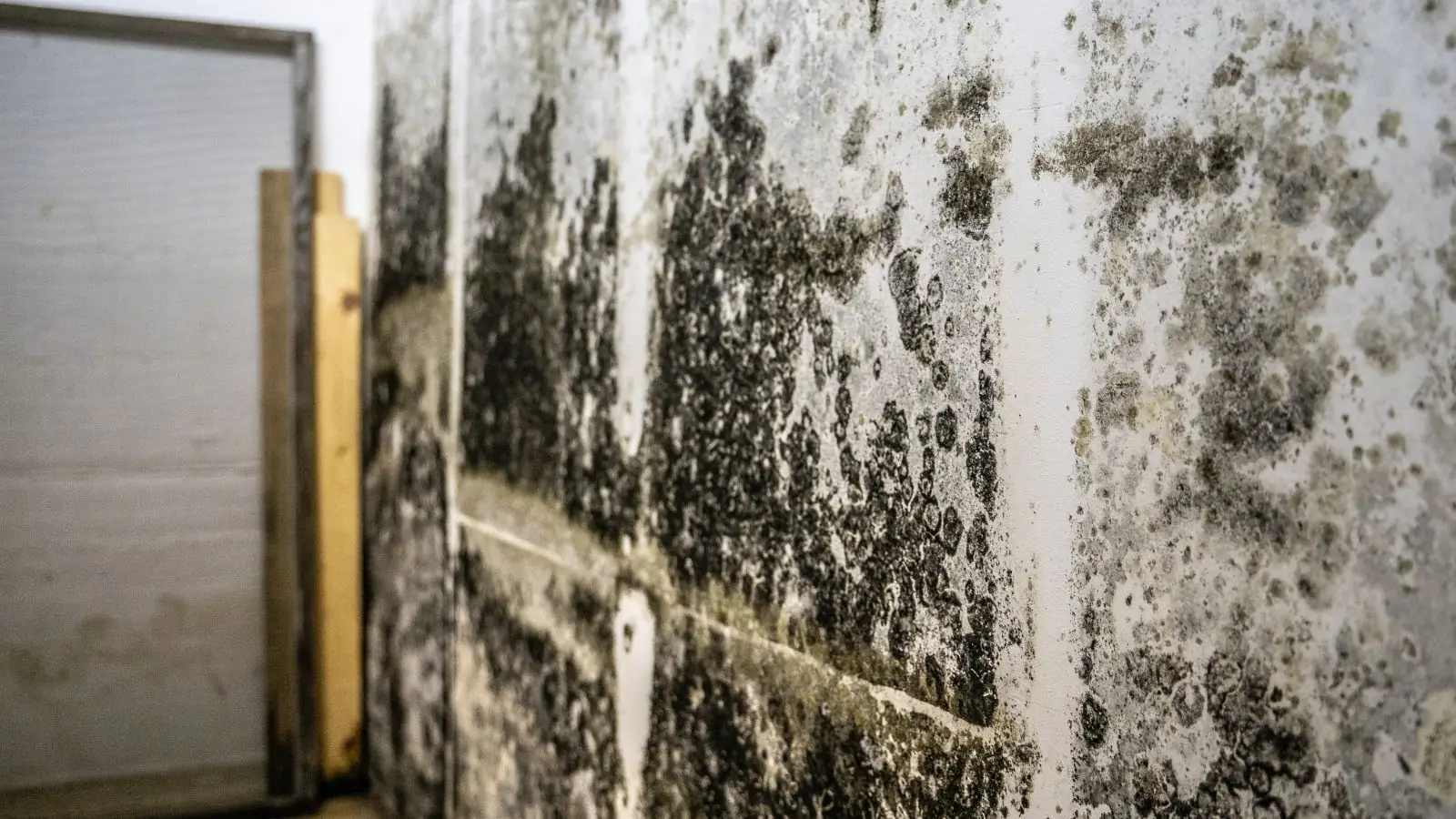
The short answer: hard, nonporous or solid materials such as poured concrete, block and framing lumber are usually cleaned and dried. Soft or porous materials such as drywall, insulation, carpet and cardboard are usually removed and bagged. The dividing line is whether the material can be cleaned all the way through.
Every treatment here assumes the moisture source has been found and fixed. Mold needs moisture, so cleaning a wall that keeps getting wet is wasted effort.
The material table
| Material | Usual treatment | Why |
|---|---|---|
| Poured concrete | Clean, HEPA vacuum, dry | Solid and dense, so growth sits on or near the surface |
| Concrete block | Clean, HEPA vacuum, dry, check mortar joints | Block is porous, so it holds moisture longer than poured concrete |
| Wood framing | Clean or sand surface growth, dry, check moisture readings | Solid lumber dries well but can hold water in the grain |
| Drywall | Remove and replace | Paper facing feeds growth and cannot be cleaned through |
| Fiberglass insulation | Remove and discard | Soaked insulation traps water and cannot be dried in a closed wall |
| Carpet and pad | Remove and discard | Backing and pad hold water and are not practical to clean |
| Cardboard boxes and stored paper | Discard, move contents out | Paper is food for mold and rarely recovers |
| Sealed or painted surfaces | Wipe with detergent, dry, check what is under the paint | Paint can hide moisture or peeling that needs attention |
Treat the table as general guidance. A crew following ANSI/IICRC S520, the published standard for mold remediation, looks at each case. Put the same question to every company you consider: does the crew work to S520?
Poured concrete and block
Concrete does not feed mold, but dust, spilled paper goods and organic film on its surface do. When growth sits on a clean concrete floor or wall, a stiff brush, detergent and water usually handles it. Crews follow with a HEPA vacuum and let the surface dry fully.
Block walls are different. The cores of the block and the mortar joints are porous, and they can wick groundwater from the outside. If a block wall has efflorescence, which looks like white powder, or a damp strip along the bottom, there is moisture in it. Cleaning helps the surface, but the water coming through is a drainage or waterproofing question, and restoration is not basement waterproofing. A waterproofing or drainage contractor handles that.
Do not seal damp concrete with paint. Sealer over a damp wall tends to peel.
Wood framing and joists
Studs, sill plates and floor joists are solid lumber, so surface growth can often be cleaned or sanded off while the wood is dry. After cleaning, a moisture meter checks that the wood has returned to a normal reading before anything is closed up. Wood that is soft, crumbling or rotted is a structural matter and gets replaced or sistered by a carpenter.
Sill plates at the bottom of a wall often stay damp the longest. If framing has stayed wet for weeks, have a professional assess it before you rebuild around it.
Drywall and insulation
Drywall has paper on both faces, and mold digs into paper. Wiping the visible patch does not clean the back, the core or the cavity behind it. When drywall is stained, soft, or has visible growth, it is cut out past the affected area, usually with a margin of a foot or more, and bagged.
Fiberglass insulation behaves like a sponge. If it was wet for more than a couple of days, remove it. Foam board can sometimes be wiped and dried because it is nonabsorbent, but check it for moisture behind the face.
Large removals call for containment barriers, negative air and HEPA air scrubbers so spores do not travel upstairs on the airflow. That is the setup used by mold remediation crews, and it is not a task to improvise with a box fan and a trash bag.
Carpet, pad and stored boxes
Wet carpet and pad are the usual casualties of a basement leak. Pad absorbs water and cannot be cleaned through, and carpet backing holds moisture against the slab. If the water was clean and the carpet was dried quickly with extraction units and air movers, it can sometimes be saved. If it stayed wet more than a day or two, or if the water was floodwater or sewage, it comes out.
Cardboard and paper goods are the same story. If boxes sat on a damp floor and show visible growth, discard them.
Painted and sealed surfaces
Painted block, painted drywall and sealed concrete floors can carry surface growth that wipes off with detergent and water. The question is what is happening under the paint. Bubbling, peeling or chalky paint usually means water is moving through the wall. If you only scrub the finish, the moisture problem stays.
Never mix cleaners, and do not rely on bleach to fix porous materials.
A practical checklist before you start
Fix the water first
Repair the leak or drainage problem. Nothing below works if the material keeps getting wet.
Sort by material
Walk the basement and note which surfaces are hard and which are soft. Photograph each one.
Protect yourself
Use an N95 respirator, gloves and eye protection, and keep fans from blowing air into living areas.
Bag soft materials
Remove wet carpet, pad and insulation in sealed bags and carry them out in a way that does not drag debris across clean areas.
Clean hard surfaces and dry them
Wipe with detergent and water, HEPA vacuum, and run a dehumidifier until readings are normal.
When to call a professional
Call if more than a small patch is affected, if the basement flooded or took on sewage, if drywall or insulation is involved, or if you cannot find where the moisture comes from. After a basement flood, flood damage restoration comes first, so water is extracted and the structure dried before mold work begins. Customers in Melrose and Woburn get the same approach, with scope and price explained before work starts.
Questions about whether mold affects anyone's health go to a physician.
Exterior drainage is often municipal work
Wakefield's Department of Public Works lists drainage improvement projects on Cedar Court, Cedar Street and Emerson Street. That is a neighbor's example, but it shows that water around a foundation can be a public drainage matter as well as a house problem. If water pools near your Stoneham foundation or enters from the street side, ask Stoneham Public Works whether the town has drainage work in your area before you pay for interior repairs that depend on it.
For flood risk, check the FEMA flood map for your address.
Frequently asked questions
Can concrete be cleaned of mold completely?
Surface growth on poured concrete usually cleans well with a brush, detergent and water, followed by HEPA vacuuming and full drying. Block is more porous and can keep supplying moisture. Cleaning removes what is visible, but dryness is what keeps growth from returning, so fix the water source and recheck humidity.
Do I have to throw out all the drywall in a moldy basement?
Not always, but drywall with visible growth, soft areas or stains from a long wetting generally comes out. A crew cuts past the affected area, checks the framing behind it and replaces the board after the cavity is dry. Small stains on drywall that dried quickly may only need monitoring. A moisture reading settles the question.
Is it safe to keep stored boxes in a basement with mold?
Cardboard and paper are porous and tend to support growth once damp, so affected boxes are usually discarded and the contents moved to plastic bins. Keep items off the floor and a few inches from walls. Anything irreplaceable can be assessed separately. For any health concern, speak to a physician.
Does painting over basement mold seal it in?
No. Paint does not dry out the material under it, and growth can show through or peel the coating. Clean what is cleanable, remove what is not, fix the moisture and let the surface dry. Only then does primer or paint make sense, applied to a surface that has tested dry.
Should a Stoneham homeowner ask the town before opening basement walls?
For the rebuilding stage, yes. Ask the Stoneham Building Department at 35 Central Street whether your repair needs a permit, because the town page does not say when water damage repair does. Permit applications go through the town's online portal, and the office asks you to call for inspections.
If you are looking at a mix of these materials, call (339) 333-9345 and list what you see. The dispatcher can tell you what usually stays and what usually goes.