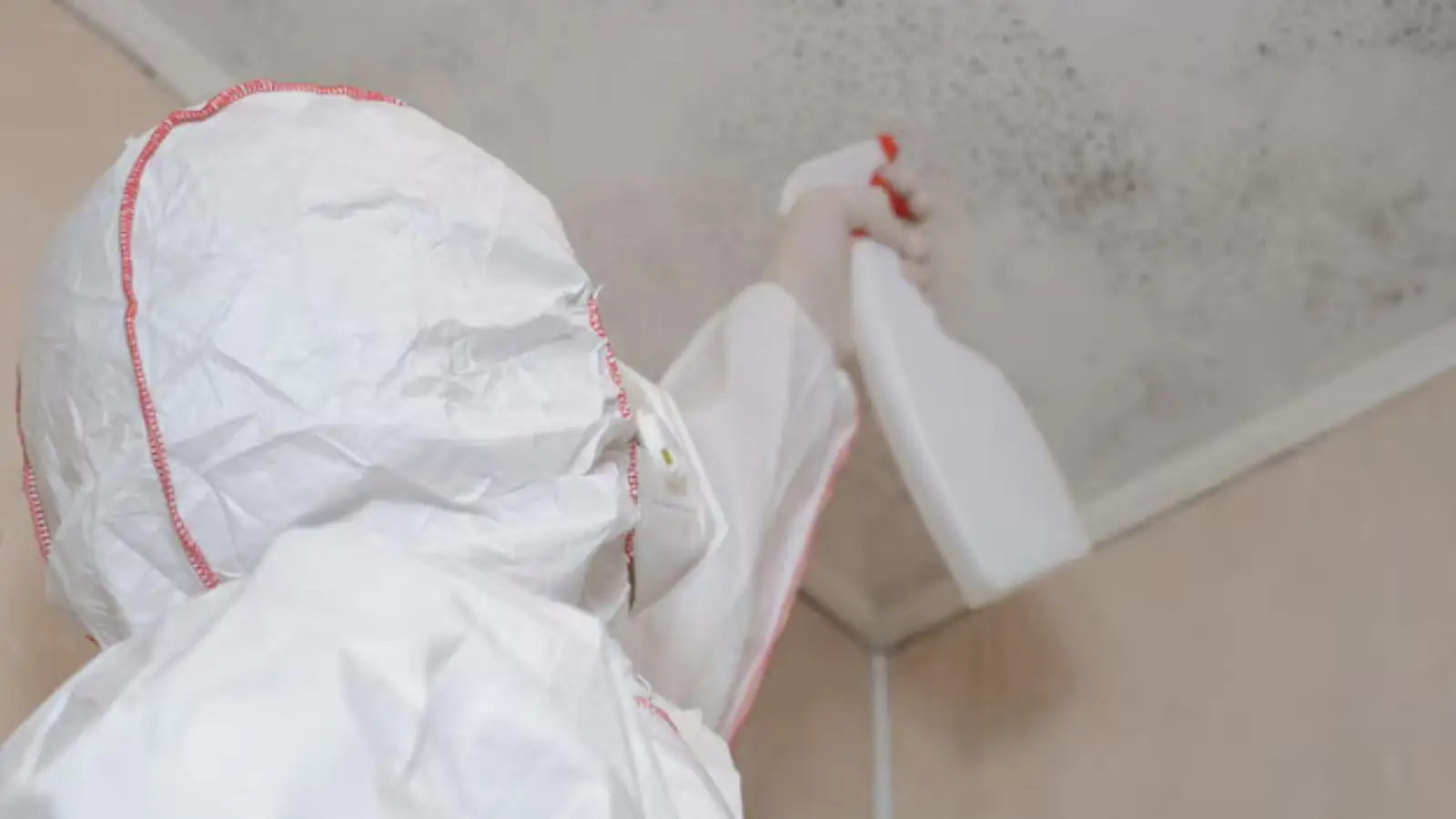
Removal depends on two things: how big the affected area is and what the ceiling is made of. A spot smaller than your palm on sealed, painted hard material can be wiped by a careful homeowner once the leak is fixed and the ceiling is dry. Anything on drywall texture, insulation or a patch that keeps growing usually means the material comes out. Cleaning a sponge-like surface does not reach the growth inside it.
Step zero: the water has to stop
Nothing you do on the ceiling holds if moisture keeps arriving. Callers often describe the same story: a toilet seal upstairs, a sink supply, an AC condensate line that backed up, or a roof leak. Get the plumber, HVAC technician or roofer in first and confirm the source is closed. Then dry the area.
Drying a ceiling means air movement and lower humidity, more than waiting. Air movers push dry air across the surface and LGR dehumidifiers pull moisture out of the room. A moisture meter tells you when the drywall is back to a normal reading. That is the line between "wet and growing" and "dry and ready for work." Water mitigation crews do this drying step, and it usually takes several days.
Small spot or big job?
Use the table to decide whether this is a weekend task or a call.
| Situation | What it usually means | Typical route |
|---|---|---|
| Spot under a palm, painted hard surface, leak fixed, dry | Surface only | Careful homeowner cleaning |
| Spot on textured or soft drywall | Growth likely behind the surface | Cut out and replace the section |
| Stain bigger than about a square foot | Wider moisture or repeat leak | Professional assessment |
| Sagging, soft or crumbling board | Material saturated | Professional removal, possibly roof or plumbing repair first |
| Insulation above is dark or damp | Moisture in the cavity | Professional removal of insulation and drywall |
| Spot comes back after cleaning | Moisture is still present | Find the source before any more cleaning |
What a homeowner can do for a tiny spot
If your spot fits the first row, protect yourself and the room. Wear an N95 respirator, goggles and gloves. Close the room's door and cover vents with plastic so nothing drifts into the house. Mist the spot lightly with water to keep dust down, wipe with a damp cloth and detergent solution, and bag the cloth right away.
Never mix cleaning chemicals. Never scrub a ceiling dry or use a leaf blower or household vacuum on it, because that throws spores into the air. If the spot is back in a week, the ceiling is damp and the job is bigger than a cloth.
Stop and call if
The spot is larger than your palm, the ceiling is soft, you smell a musty odor in a room you cannot trace, or anyone in the home has a health concern. Health questions go to a physician, not to a cleaning routine.
How professionals remove ceiling mold
The work follows ANSI/IICRC S520, the published industry standard for mold remediation. Any company you call should be able to say whether its crews work to that standard. The steps below are the usual order for a ceiling.
Assess and map
The crew uses moisture meters and a thermal imaging camera to find where the ceiling is wet or was wet, so the cut lines are based on readings and not guesses.
Set containment
Plastic barriers seal the work zone. Negative air with a HEPA air scrubber pulls air through filters and keeps pressure lower inside the zone than outside.
Remove affected material
Drywall and insulation that cannot be cleaned are cut out and bagged. Cut lines go past the visible edge into material that reads sound.
Clean the framing
Joists and surfaces that remain are HEPA vacuumed and cleaned. Wood that is structurally sound can be cleaned instead of replaced.
Dry and verify
Any leftover moisture is dried out. Many homeowners add independent clearance testing, performed by someone who is not the remediation company.
Rebuild
New drywall, texture and paint go in once the area is dry and cleared. This is water damage repair work.
Why the whole section often comes out
Mold is more than a stain on the paint. It sends thread-like growth into porous materials, so wiping the surface leaves the rest in place. Drywall paper, ceiling texture and insulation cannot be washed back to clean. Removing the section is predictable. Cleaning around it is not, and the spot tends to reappear if the material stays damp.
Dead growth is also not the goal. Whether it is living or not, it still has to come out of the home. That is why remediation focuses on physical removal and drying, and why spray-on fixes alone are not what the standard describes.
Before you open a ceiling in Stoneham
If the job involves opening ceilings, framing or roofing work, ask the town Building Department whether a permit or inspection applies, because the town page does not spell out when permits are needed for water damage repair. The office is at 35 Central Street, Garden Level, and it accepts permit applications online. Asking before the demolition starts is cheaper than discovering a permit question after the new drywall is up.
Selling, refinancing or renting
Some callers need documented removal because a buyer's lender will not fund until the mold is dealt with. In that case, keep the paperwork: the scope, the photos and the post-work clearance result from an independent tester. Do not treat a cleaned surface as documented removal. Crews in Winchester and Wakefield handle the same request routinely.
Call (339) 333-9345 if the area is beyond a small spot. Scope and price are explained before work starts, and a crew looks at the ceiling before anything is opened.
Frequently asked questions
Can I just spray the mold and leave it?
Spraying does not remove growth, and leftover material still needs to come out. On a tiny spot of hard surface, wiping with detergent and water is the usual homeowner step. For drywall, insulation or larger areas, removal and drying are what the standard calls for, so a spray alone is not a fix.
Do I have to replace the whole ceiling?
Usually not. Crews cut out the affected section plus a margin of sound material, based on moisture readings and what they find behind the board. A single wet corner often means one section, while a roof leak that spread across several joist bays can mean more.
How long does ceiling mold removal take?
Drying takes several days after the leak is fixed. Containment, removal and cleaning of a single ceiling area are often done in a day or two, then rebuild follows once the area is dry and cleared. Larger areas or hidden moisture add time.
Can I paint over it with mold-blocking paint?
Paint over damp or growing material hides the problem and lets it spread underneath. Paint only after the leak is fixed, the material removed or cleaned as needed, and the ceiling reads dry. Treat primer as a finish step, not a solution.
Does a Stoneham ceiling repair need a permit?
We cannot say, since it depends on the scope. Ask the town Building Department before opening ceilings or doing roofing work. The office accepts applications online and asks you to call for inspections, so a short call settles whether your job is covered.