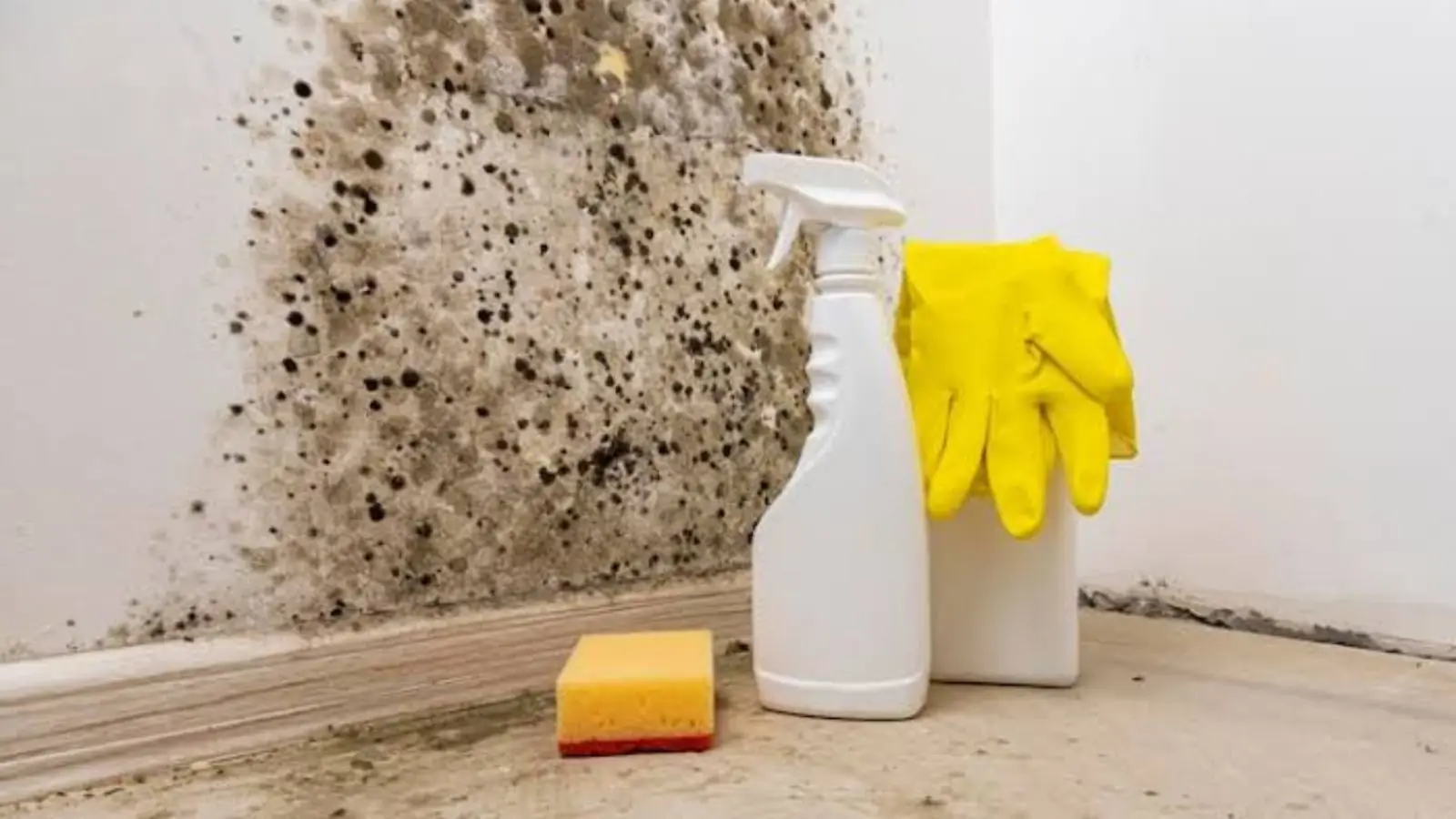
Most people searching this want a spray that makes the mold disappear. The honest answer is that killing it is the wrong goal. Dead mold is still mold material, and it still has to be removed from the home. On a hard, non-porous surface, detergent and water physically lift the growth off. On drywall, wood or insulation, the material is cut out or cleaned by a trained crew. In both cases, the moisture must stop first.
Why "kill" is the wrong word
Mold grows from spores, and spores are everywhere. You can kill a patch on a surface and still have spores floating in the room, and you can kill a patch and still have dead growth stuck in the fibers of drywall. A product that kills growth on top does not clean what is underneath. If the damp material stays damp, new growth starts again.
That is why the published industry standard, ANSI/IICRC S520, centers on physical removal, containment and drying instead of treating the patch with a chemical. Ask any company whether its crews follow it. Then check what they plan to do with the damp materials, because a plan that stops at spraying leaves the real issue in place.
What works and what does not
Surface type decides almost everything. Hard, sealed surfaces can be cleaned. Porous ones usually cannot.
| Surface | What works | What does not |
|---|---|---|
| Glazed tile, glass, sealed metal | Detergent and water, wipe, dry fully | Painting over it |
| Painted, sealed hard trim (small spot) | Detergent and water, wipe, dry fully | Dry scrubbing or sanding |
| Drywall and ceiling texture | Cutting out the affected section | Spraying the surface and leaving it |
| Wood framing, sound | HEPA vacuuming and cleaning by a crew | Sealing over visible growth |
| Insulation | Removal and replacement | Cleaning in place |
| Carpet and pad | Removal if it stayed wet | Surface treatments |
Some homeowners reach for vinegar, tea tree oil or peroxide. Results vary, none removes what has soaked into a porous material, and none replaces fixing the leak. Never mix cleaning products. Never rely on bleach, or any spray, to fix drywall, wood or other porous materials.
The checklist before you reach for a spray
A spray bottle feels like action, but the order of work matters more than the product. Run through these steps in sequence, and stop at the first one that tells you the job is bigger than a cloth.
Fix and confirm the water source
A recent toilet, sink, AC condensate line, roof or siding leak is the usual cause. Get it repaired, then confirm it is dry.
Identify the surface
Is it glazed tile or sealed trim, or is it drywall, wood or insulation? That decides whether you wipe or call.
Measure the area
Under about ten square feet on a hard surface is a homeowner scale. Above that, or any porous surface, call.
Protect yourself and the room
N95 respirator, goggles, gloves, door closed and vents covered. Mist the spot first, so dust stays down.
Wipe, bag and dry
Use detergent and water, bag each cloth, and dry the surface with a fan. Check again after a week.
Why "black mold" matters less than people think
The phrase gets used for any dark growth. Color does not identify what is growing, and you cannot tell by looking whether a patch is more or less concerning. For the homeowner, size and moisture are the things you can act on. If you have questions about health or symptoms, take them to a physician.
Testing can still help. If you are selling, or a lender wants the problem resolved, an independent assessor can inspect, sample and later run clearance testing. Keep that person separate from the company doing the removal. Ask whether your state licenses mold work and whether the assessor works to S520.
Do not do this
Do not seal over growth with paint or caulk. Do not sand or scrub dry. Do not run a fan across a mold patch into the rest of the house. Do not enter standing water if it might touch electrical or sewage. Cut power only if you can reach the panel while dry, and call the utility or 911 before calling a restoration line.
When removal means a crew
Once the growth is on drywall, ceiling board, wall cavities or insulation, the right approach is physical removal. A crew sets containment barriers, runs negative air with HEPA air scrubbers, cuts out affected material, cleans remaining framing and dries the space with air movers and LGR dehumidifiers. Moisture meters and a thermal imaging camera show where wet material sits behind the surface. See mold remediation for the process in detail.
After the clearance result, the rebuild is water damage repair: new drywall, texture, trim and paint, once the area is dry. Crews working in Woburn and Winchester follow the same order: stop the water, dry, remove, verify, rebuild.
If the water will not stop in Stoneham
Stoneham's page says that after business hours, emergencies go to the Stoneham Police Department line, which matters if the water source seems to be outside your control, such as a burst pipe at night. Shut your home's main valve first if you can reach it. Call that town line for anything the street side may be causing, then call a restoration crew. Mold cleaning only makes sense after the water is stopped.
Call (339) 333-9345 when growth is on porous material, the area is larger than a small spot, or you do not know where the moisture is coming from. Scope and price are explained before work starts.
Frequently asked questions
What kills black mold on walls?
On a hard, sealed wall surface, detergent and water remove small growth by wiping. On drywall, no spray reaches growth that has soaked into the paper and gypsum, so the section is cut out. Whatever you use, fix the moisture first and never mix products.
Does bleach kill mold?
Bleach does not reach growth that has soaked into porous materials, so it is not a fix for drywall or wood. Never mix it with other products. Detergent and water, plus drying, are the safer homeowner step for small spots.
Is dead mold still a problem?
Dead growth is still material that needs removal, because it remains in the fibers of a porous surface. Removal and drying are the point of remediation, with killing as a side issue. That is why the standard focuses on containment, physical removal and checking that the area is dry.
Can a mold test tell me what to do?
A test can document what is present and later confirm clearance, which helps with a sale or loan. It does not replace finding the moisture source. Use an independent assessor, and ask whether your state licenses mold work.
Who do I call in Stoneham if water is running and I cannot stop it?
Shut off your home's main valve first. For an emergency after business hours, the town directs callers to the Stoneham Police Department line, and Public Works handles the mains. For electrical or gas risk, call the utility or 911 before a restoration crew.