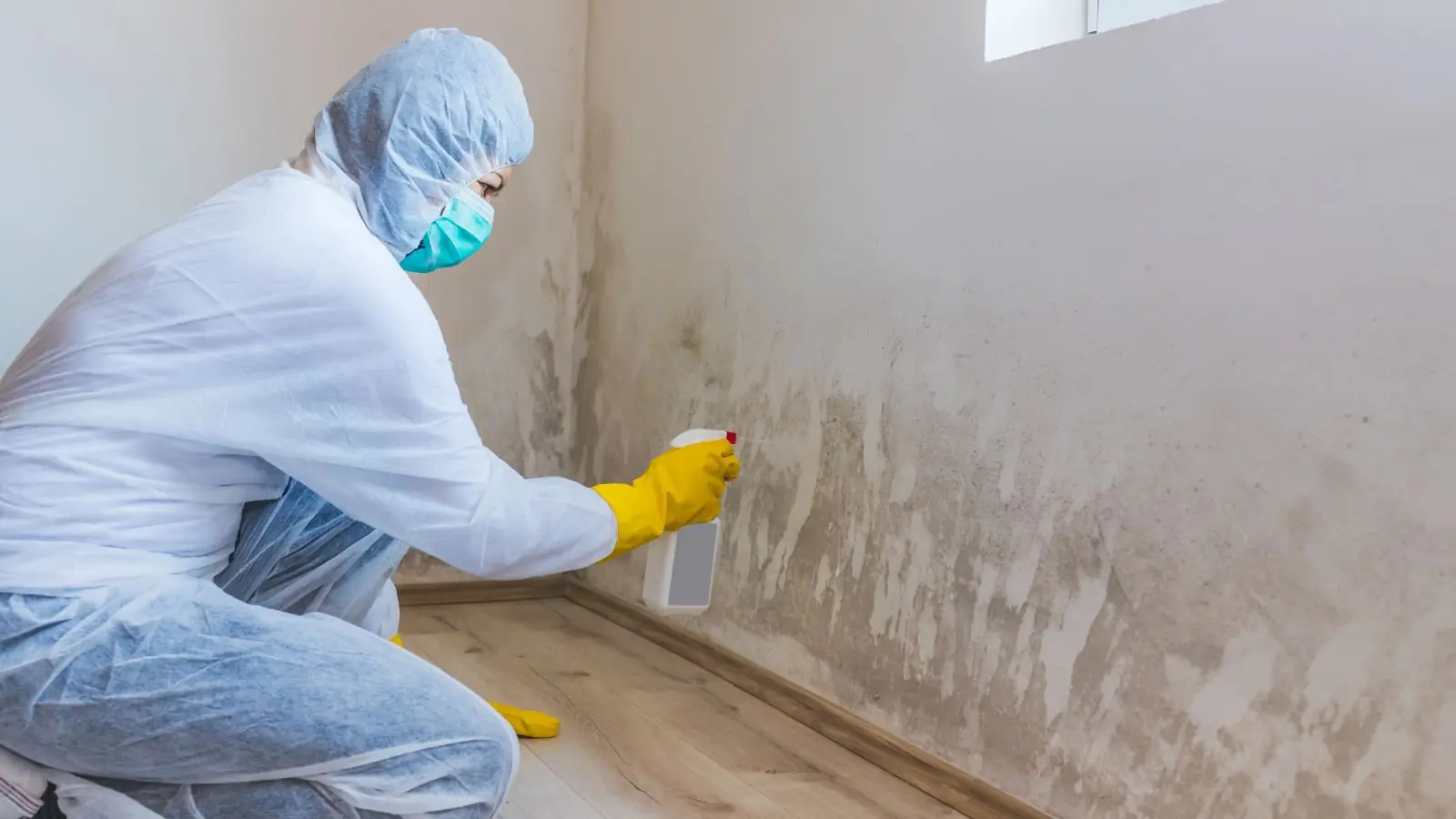
You can clean a small patch of mold yourself if three things are true: the spot is under about ten square feet, it sits on a hard, non-porous surface such as glazed tile, sealed metal or glass, and the water source is already fixed. Use detergent, water, a damp cloth and protective gear. If the growth is on drywall, ceiling texture, carpet, insulation or wood that has soaked up water, stop. Those materials need removal, not scrubbing.
First, make sure the leak is over
Mold needs moisture. If the toilet, sink line, AC condensate line, roof or siding that caused the problem has not been repaired, cleaning will not last, and the spot will return. Confirm the repair first, then dry the area for at least a day with a fan and, if you have one, a dehumidifier.
A cheap moisture meter helps. Drywall and framing should read close to the dry reading in a room you know is fine. If the numbers stay high, the material is still wet inside, and that is the point where a professional drying crew is useful, because air movers and LGR dehumidifiers pull moisture out far faster than a household fan. See water damage cleanup for how that drying is done.
Gear to put on before you start
Disturbed growth sends spores into the air, so protect your lungs, eyes and skin, and protect the rest of the house.
| Item | Why it matters | Notes |
|---|---|---|
| N95 respirator or better | Filters airborne particles | Fit it snugly against the face |
| Goggles without vent holes | Keeps particles out of eyes | Regular glasses are not enough |
| Long gloves, nitrile or rubber | Protects skin | Discard them afterward |
| Disposable coveralls or old clothes | Keeps spores off your clothing | Wash separately or throw away |
| Plastic sheeting and tape | Seals the room and vents | Cover returns and supply registers |
| Heavy trash bags | Contains used cloths | Close and bag them in the room |
The safe method for a small hard-surface spot
Seal and ventilate
Close the door, cover vents and doorways with plastic, and open a window if the weather allows. Keep a fan blowing out of the window, not into the house.
Mist, do not scrub dry
Lightly mist the spot with water to keep dust down. Dry scrubbing, sanding or brushing sends spores into the air.
Wipe with detergent and water
Use a cloth with dish detergent in water. Work from the edge inward, folding the cloth to a clean face often.
Bag as you go
Put each used cloth straight into a trash bag. Do not rinse cloths in the sink.
Dry the surface fully
Wipe with a clean damp cloth, then dry thoroughly with a clean towel and a fan. A damp surface invites regrowth.
Check again after a week
If the spot is back, the surface or the air behind it is still wet. Stop cleaning and look for the moisture.
What not to do
Never mix cleaning chemicals. Combining products can release dangerous gases, and mixing is never part of a mold cleaning method. Pick detergent and water and stop there. Do not use a household vacuum, which pushes spores through its exhaust, and do not use a leaf blower, a dry brush or sandpaper.
Do not paint over mold, caulk over it or cover it with wallpaper. And do not rely on any spray, bleach included, for porous materials such as drywall or wood. A spray works on the surface and cannot reach what has soaked in.
Stop and call a professional if
The patch is larger than about ten square feet, sits on drywall, insulation or carpet, the area is wet or sagging, you smell mustiness you cannot trace, or sewage or a flood was involved. If anyone in the home has a health concern, ask a physician, not a cleaning guide.
When cleaning is not the answer
Porous materials absorb moisture, and growth moves into them. Cleaning the surface leaves the rest. Professional mold remediation uses containment barriers, negative air and HEPA air scrubbers, and it follows ANSI/IICRC S520, the published standard. Ask any company whether its crews work to it, and ask whether your state licenses mold work.
If you are selling, or a buyer's lender wants the issue resolved, a cloth and detergent will not give you paperwork. Independent clearance testing after professional work is the usual record, and the tester should be separate from the company that did the removal.
Drainage, sewer and damp basements near Stoneham
Stoneham Public Works maintains about 75 miles of sewer and works to reduce sewer infiltration and inflow, which is why raw sewage in a basement drain is a separate hazard from mold, and one to keep out of and call about.
Next door, the Wakefield DPW lists drainage improvement projects on Cedar Court, Cedar Street and Emerson Street, a reminder that exterior drainage is municipal. If your basement stays damp after you have fixed plumbing, ask your town's public works office about drainage near your lot before you keep cleaning.
Cleanup after a recent leak
Most mold calls begin with water: an upstairs toilet that overflowed, a sink line that slipped, a condensate pan that filled. When the leak is recent, the best move is drying within the first 24 to 48 hours, before growth starts. Remove wet rugs, pull baseboards if they are soaked, and move furniture away from damp walls.
Crews working in Wakefield and Medford deal with the same wet-first, mold-second order. If the damp area is wider than you can dry in a day, call (339) 333-9345. Scope and price are explained before work starts.
Frequently asked questions
What is the best thing to clean mold with?
For small hard-surface spots, dish detergent and water on a cloth is the safe choice. Never mix products. For porous materials, cleaning does not reach the growth, so the material is removed. If you want a specific product, read its label and use it alone.
Is it safe to clean mold myself?
For a spot under about ten square feet on a non-porous surface, with protective gear and the moisture fixed, many homeowners do. Larger areas, wet drywall or any health concern are reasons to stop. Health questions go to a physician, not to a cleaning guide.
Can I use a household vacuum on mold?
No. A standard vacuum blows fine particles back into the room through its exhaust. Professionals use HEPA vacuums sealed to filter what they collect. If a spot needs vacuuming before cleaning, that is a sign to call.
Will cleaning stop mold coming back?
Cleaning removes what you can see, but only dry conditions keep it away. If humidity, a leak or condensation continues, growth can appear again. Fix the water source, dry the materials, ventilate the room, and check the area for a week.
Who do I ask about drainage problems around my Stoneham basement?
Ask Stoneham Public Works about drainage and sewer questions on your street. After business hours, the town directs emergencies to the Stoneham Police line. For standing water inside, power off only if the panel is dry to reach and call the utility for any electrical risk first.