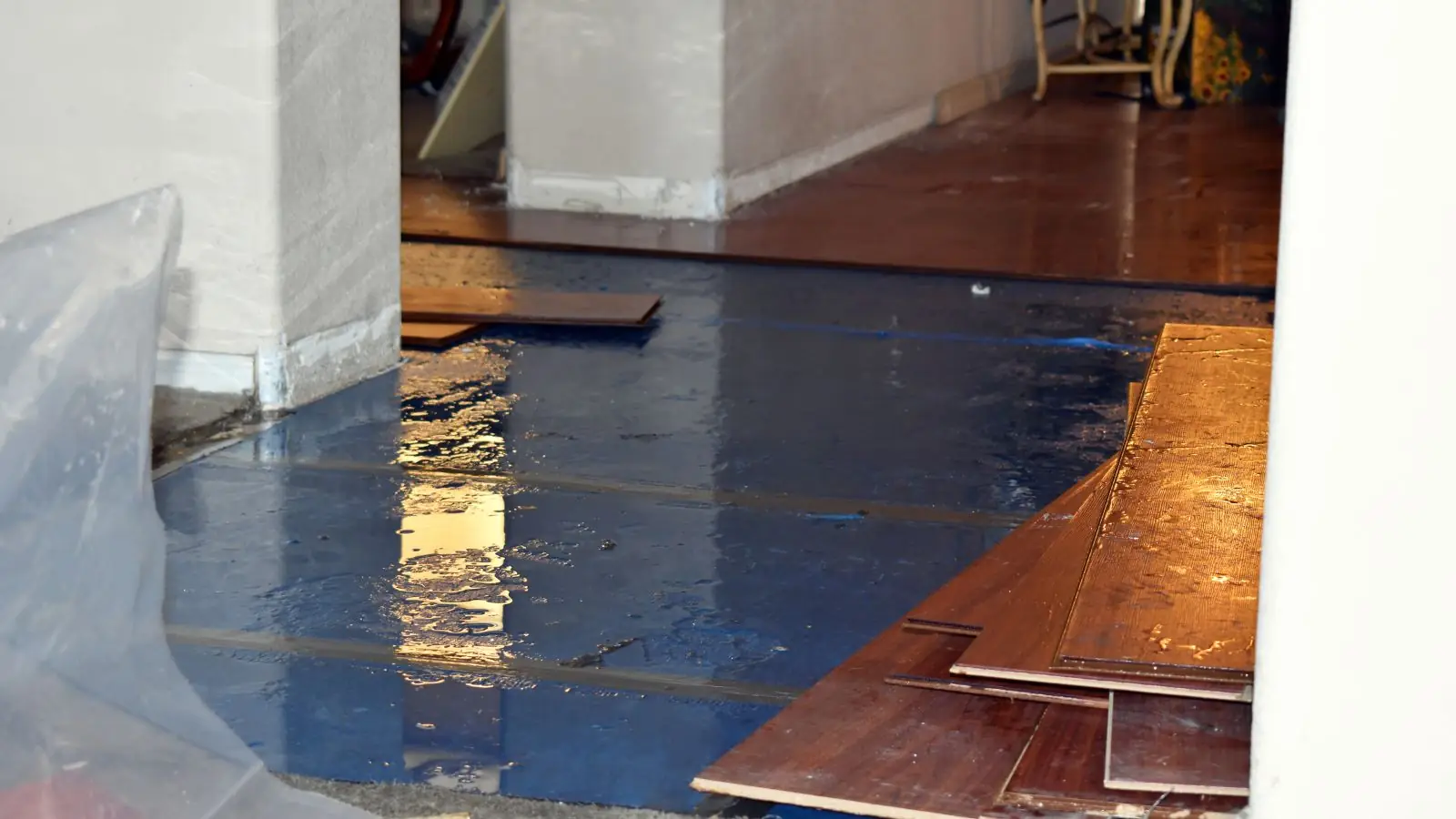
After a hardwood floor has dried, you have four realistic options: repair a few boards, replace a section, sand and refinish the whole floor, or replace it entirely. The right one depends on how much of the floor is damaged, whether the subfloor read dry, and whether new boards can match the old ones. Moisture readings come first, not appearance.
This post assumes the wet stage is over. If the floor is still wet, drying has to finish before any of these choices make sense, because repairs made on damp wood fail.
Confirm the floor is actually ready
Before anyone cuts, sands or nails, someone should confirm the boards and the subfloor have reached a stable, normal moisture reading. Readings are compared to an unaffected area of the same floor, since a target depends on the wood, the season and the room. A flooring contractor will usually want several readings across the floor taken over a few days or weeks.
Cupping may ease on its own as the wood relaxes. Giving it time before sanding is common practice. Sanding a cupped floor flat while it still holds extra moisture sets up crowning, which means the center rises as the boards continue to dry.
If you do not have meter readings, ask for them. A floor that merely feels dry is not proof.
The four repair paths
Think of the options as a ladder. Each rung costs more labor and disrupts more of the room.
| Damage level | Repair option | When it fits |
|---|---|---|
| A few stained or damaged boards | Spot repair | Damage is isolated and boards can be pulled and replaced without disturbing neighbors |
| One zone cupped, gapped or buckled | Board or section replacement | Subfloor is dry and sound, and replacement wood can be blended in |
| Whole floor dull, slightly cupped or scratched, structure sound | Sand and refinish | Boards have flattened and enough wear layer remains |
| Widespread buckling, rot, repeated wetting or wet subfloor | Full replacement | Boards cannot be saved or the structure under them needs rebuilding |
Spot repair
A flooring contractor cuts out the damaged boards, often by splitting them lengthwise to avoid harming the tongue and groove of neighbors, and weaves in new boards. The patch is then sanded and finished to blend. It works when damage is localized, such as a few boards under a leaking dishwasher.
Board or section replacement
When a larger zone is affected, a section is removed back to a natural break such as a doorway, then rebuilt with matching species and width. Staggered end joints keep the repair from looking like a rectangle. If the subfloor is damaged, it gets repaired first.
Sanding and refinishing
Refinishing works when the boards are flat again, structurally sound and thick enough to be sanded. Solid hardwood can usually be refinished a limited number of times because each sanding removes some of the wear layer above the tongue. Engineered boards have a thinner top layer, so check what you have before assuming sanding is possible.
Full replacement
Replacement is the answer when the boards are buckled across much of the floor, rotted, delaminated if engineered, or still cupped after the subfloor has dried. It also makes sense when the subfloor needs replacing or when a repeat water event has hit the same floor. This work falls under water damage repair.
What decides the cost
You will see wide differences between quotes, and the reasons are straightforward. Cost factors include the species and width of the boards, how many square feet are affected, whether the damage crosses room boundaries, the condition of the subfloor, how well new boards match old ones, the number of finish coats, and the days of drying equipment that came before.
Water category matters too. Clean water from a supply line is a different job than a sewage backup, where porous flooring may need removal regardless of how it looks. Ask any contractor to write the scope before work begins, with the repair method named and the finish plan spelled out. Scope and price should be explained before work starts.
Finish matching is harder than it sounds
Even identical species rarely match perfectly. Old floors have aged in the light, and stain colors differ by batch. A patched area can look like a different shade for months. Contractors manage this by blending: sanding a wider area, feathering stain, and choosing replacement boards from the same species and grain pattern.
If the floor runs through several rooms without breaks, a spot repair may stand out and a full sand and refinish of the connected area can look better than a patch. Ask to see a sample finished in your lighting before you agree to a color.
Subfloor and moisture questions to settle first
Ask for written moisture readings
Request readings from the boards and the subfloor, compared with a dry reference area.
Check the cause is fixed
Confirm the leak, drain or appliance issue is repaired. A repaired floor over a recurring leak will fail.
Inspect the underside
If you have a basement or crawl space below, look at the joists and subfloor for stains, softness or growth.
Decide on the finish plan
Confirm whether the plan is patch and blend, refinish the whole floor, or replace. Get the species and the sheen in writing.
Ask about the cleanup and any removal
Have the contractor describe dust control and where discarded boards go. If mold is found, mold work follows ANSI/IICRC S520.
One honest note: a failed hardwood floor over a damp slab may be a moisture-barrier or building problem, not a restoration job. A flooring or waterproofing contractor handles that kind of cause.
When to call a professional
Call if the floor has been dry but still cups, if boards are lifting off the subfloor, if you see dark staining or smell damp wood, or if you cannot get readings. Hiring a crew that handles water damage cleanup first matters when contaminated water has been in contact with the boards. Teams working near Wakefield and Melrose follow the same approach.
Insurance depends on the policy and the cause. Sudden and accidental damage is often covered, gradual leaks and neglect often are not, and flood damage usually needs separate coverage. Check your policy before choosing the repair, and keep photos and written scopes.
Permits and inspections for Stoneham floor work
If your repair goes beyond patching boards, such as rebuilding a subfloor or opening framing, ask the Stoneham Building Department at 35 Central Street whether you need a permit. The town page does not say when water damage repair requires one. Permit applications are accepted through the town's online portal, and the office asks you to call for all inspections, so confirm the process before the contractor starts and not after the floor is closed up.
Frequently asked questions
Can water damaged hardwood be repaired instead of replaced?
Often yes. Isolated damage can be spot repaired, and a flat, dry floor can be sanded and refinished. Replacement is more likely when boards are buckled, rotted or the subfloor stayed wet. Moisture readings and a flooring contractor's inspection tell you which, and the cause of the water must be fixed first.
How long should I wait before sanding a cupped floor?
Until moisture readings of the boards and subfloor are stable and normal, which can take weeks after drying equipment is removed. Sanding too soon can leave the center of each board higher than the edges as the wood continues to release moisture. A contractor can recheck readings over time.
Will new boards match my old floor?
They can come close, not perfect. Species, grain, age and stain all affect color. Blending, feathering stain and refinishing a wider area reduce the visible patch. Ask for a sample in your room's light, and plan on a full sand and refinish of connected space if matching matters to you.
Why does one contractor recommend repair and another replacement?
Their assumptions may differ about subfloor moisture, board thickness and finish matching. Ask both for readings, the scope in writing and the reason for each recommendation. A cheaper repair on a floor with a wet subfloor can cost more later than the replacement it avoided.
Do I need a permit in Stoneham to replace a hardwood floor after water damage?
That depends on the scope, and the town page does not say. Replacing finish boards is different from rebuilding a subfloor or touching framing. Ask the Stoneham Building Department at 35 Central Street before work begins, and call the office for inspections.
If your floor is dry but still looks wrong, call (339) 333-9345 and describe it. A dispatcher can send licensed and insured professionals to take readings.