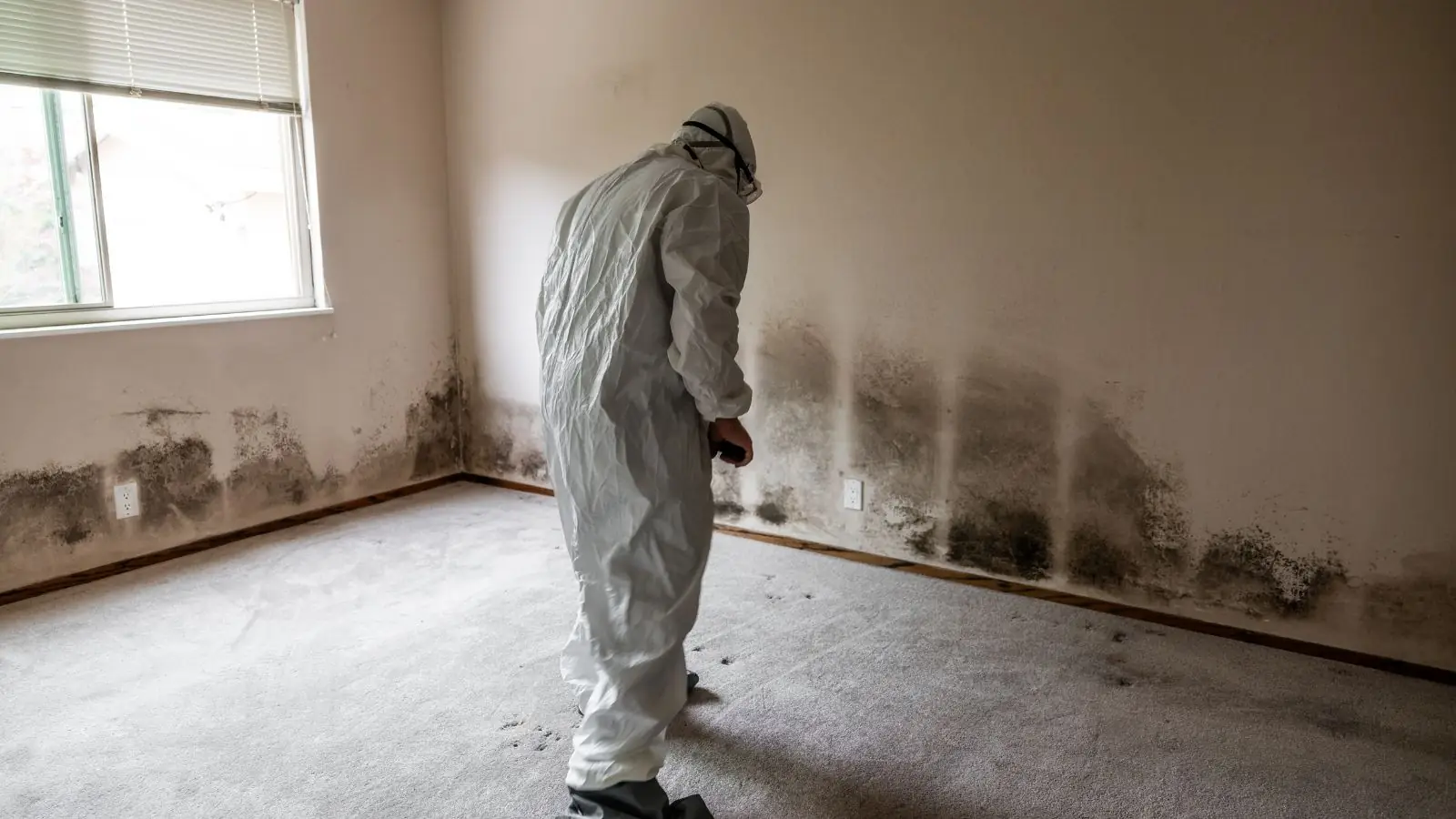
To get rid of basement mold, you stop the moisture first, then remove or clean the affected materials, then dry the space and check that it stays dry. Scrubbing a wall without fixing the leak behind it only buys a few weeks. Mold needs moisture to grow, so the water source is always step one.
A small patch on a hard, nonporous surface is something many homeowners handle with basic cleaning and ventilation. Anything spread across drywall, insulation, carpet or framing, or anything that follows a sewage backup, belongs with trained crews. Here is the whole process in order.
Step one is the water, not the mold
Mold grows on damp organic material such as paper facing on drywall, wood framing, cardboard and carpet backing. Without moisture it stays dormant. So before you buy a single scrub brush, find out why the basement got wet in the first place.
Common sources are a slow plumbing leak, a failed washer hose, an HVAC condensate line, a leaking window well, groundwater through a foundation wall, and condensation on cold pipes in humid weather. Each has a different fix, and mold on the wall does not tell you which one you have.
Look for the pattern. A stain that follows a pipe points to plumbing. A damp strip along the bottom of a wall points to groundwater or drainage. Moisture on upper walls in summer points to humid air meeting cool concrete.
Honest note: water damage restoration is not basement waterproofing. Crews dry, clean and remove damaged material. If water keeps entering through the foundation, you also need a waterproofing or drainage contractor.
Check humidity before and after
A cheap hygrometer tells you more than your nose does. In general terms, indoor relative humidity held somewhere around 30 to 50 percent is the range most guidance points to for discouraging mold growth. Basements in warm months often sit well above that.
A dehumidifier sized for the space helps, but it is a maintenance tool, not a cure for an active leak. Run it to a drain if you can, keep it away from walls, and let it work for days, not hours.
| Reading or sign | What it usually means | Next move |
|---|---|---|
| Humidity above 60 percent for days | Air is damp enough to support growth | Run a dehumidifier, check for leaks and venting |
| Musty smell, no visible growth | Hidden moisture or old damp material | Inspect behind stored items and along walls |
| Visible growth on one hard surface | Surface contamination after a humid spell | Clean the surface, dry the area, recheck in a week |
| Growth on drywall, insulation or carpet | Porous materials holding moisture | Plan removal, consider a professional |
| Wet floor after rain | Groundwater or drainage problem | Call a drainage or waterproofing contractor |
What a homeowner can do
If the affected area is small, the leak is fixed and the material is hard and nonporous, you can usually handle it yourself.
Wear an N95 respirator, gloves and eye protection before you disturb anything. Run a fan that exhausts outdoors so spores do not drift upstairs. Wipe sealed concrete, metal and plastic with detergent and water, then dry them fully.
Bag porous items that stayed wet for days, such as carpet padding, ceiling tile and cardboard, and discard them. Never mix cleaning products, because combined chemicals can release dangerous fumes. Do not paint over mold, since paint does not dry out the material underneath.
If you are unsure what you are looking at, stop and have someone look. Questions about whether mold affects anyone's health belong with a physician, not a cleaning guide.
When to hire a professional
Call for help when growth covers a large area, when it sits in drywall or insulation, when the source was a sewage backup or floodwater, or when you cannot find and fix the moisture. Also call if a buyer's lender or an insurer asks for documentation.
Professional mold work follows ANSI/IICRC S520, the published industry standard for mold remediation. A fair question for any bidder is whether the job plan matches S520. A mold remediation crew sets up containment barriers with plastic sheeting, runs negative air with HEPA air scrubbers so loosened spores do not drift upstairs, removes contaminated porous material, and cleans the remaining structure with HEPA vacuums and damp wiping.
If the basement is also actively wet, water mitigation comes first. Extraction units pull standing water, then air movers and LGR dehumidifiers dry the structure while moisture meters and a thermal imaging camera confirm what is still wet.
The process in order
Find and stop the water
Repair the leak, clear the drain, redirect the downspout or call the right trade. Nothing else works until this is done.
Dry the space
Remove standing water and run air movers and dehumidifiers. Materials that stay wet past about 48 hours are where growth tends to start.
Contain the work
For anything beyond a small patch, seal the area with plastic sheeting and keep the HVAC system from pulling air through it.
Remove or clean by material
Porous materials that are contaminated usually come out. Hard surfaces are cleaned and dried. Specifics depend on what the material is.
Clean the air and surfaces
HEPA vacuuming and damp wiping follow removal. HEPA air scrubbers run until the work is finished.
Verify and rebuild
Confirm the moisture readings are normal, then rebuild. Do not close up walls over damp framing.
How you know it is finished
Finished does not mean the smell is gone. It means the moisture source is fixed, the affected material has been cleaned or removed, moisture readings on remaining materials are back to normal, and no visible growth remains. On larger jobs, a third party can run post-remediation testing against the written scope to confirm the result. That independent clearance is what a lender or buyer often wants to see.
After that, keep humidity down, fix small leaks the week you find them, and keep stored items off the floor and away from the walls. Mold can return anywhere moisture does, so ongoing dryness is the real protection.
Stoneham basements and the town's sewer work
Stoneham Public Works Water/Sewer Department maintains about 75 miles of sewer and works to reduce sewer infiltration and inflow, which means groundwater and stormwater getting into sewer pipes.
If your basement floor drain backs up after heavy rain, that is a sewage question and not a mold-cleaning one, so ask Public Works whether the problem sits in the town's line or in yours before a plumber opens anything up. After business hours, the town's page directs emergencies to the Stoneham Police Department line.
For seepage through a foundation wall, check the FEMA flood map for your address. Knowing whether your property sits in a mapped flood area affects whether you should ask your insurer about separate flood coverage.
Frequently asked questions
Can I get rid of basement mold with bleach?
Bleach does not fix porous materials such as drywall, wood or carpet, because the growth sits below the surface. It also gives off fumes and must never be mixed with other cleaners. On sealed, nonporous surfaces, detergent and water with thorough drying is the usual homeowner approach. Large or porous problems call for removal and a professional crew.
Will a dehumidifier alone solve a mold problem?
No. A dehumidifier lowers the humidity that feeds growth, but it will not remove mold that already exists or stop a leak. Use it after the water source is repaired and the contaminated material is cleaned or removed, and watch a hygrometer to confirm the basement holds a steady, moderate humidity level.
Do I need testing before I remove basement mold?
Not always. Visible growth in a damp basement can often be treated without a lab sample, and the work should follow ANSI/IICRC S520 either way. Testing becomes useful when you need documentation, such as for a home sale or loan, or when you want independent confirmation that remediation worked.
What if the mold comes back after cleaning?
Returning growth almost always means moisture is still present. Check for a slow leak, a damp wall, a condensate line or high humidity. Repeat cleaning without fixing the source wastes time. A moisture inspection with meters and a thermal imaging camera can find water you cannot see.
Is a Stoneham basement drain backup something I can clean myself?
Not safely. Sewage is Category 3 water, and anything it touches in a basement is generally treated as contaminated. Stay out, keep children and pets away, and avoid electrical hazards. Contact Public Works about the line, then call a licensed and insured restoration crew for extraction and cleanup. Ask your insurer about coverage.
If you are standing in a damp basement and cannot tell where the water starts, call (339) 333-9345 and describe what you see. Crews serving Stoneham also reach customers in Woburn and Wakefield, and the scope and price are explained before work starts.