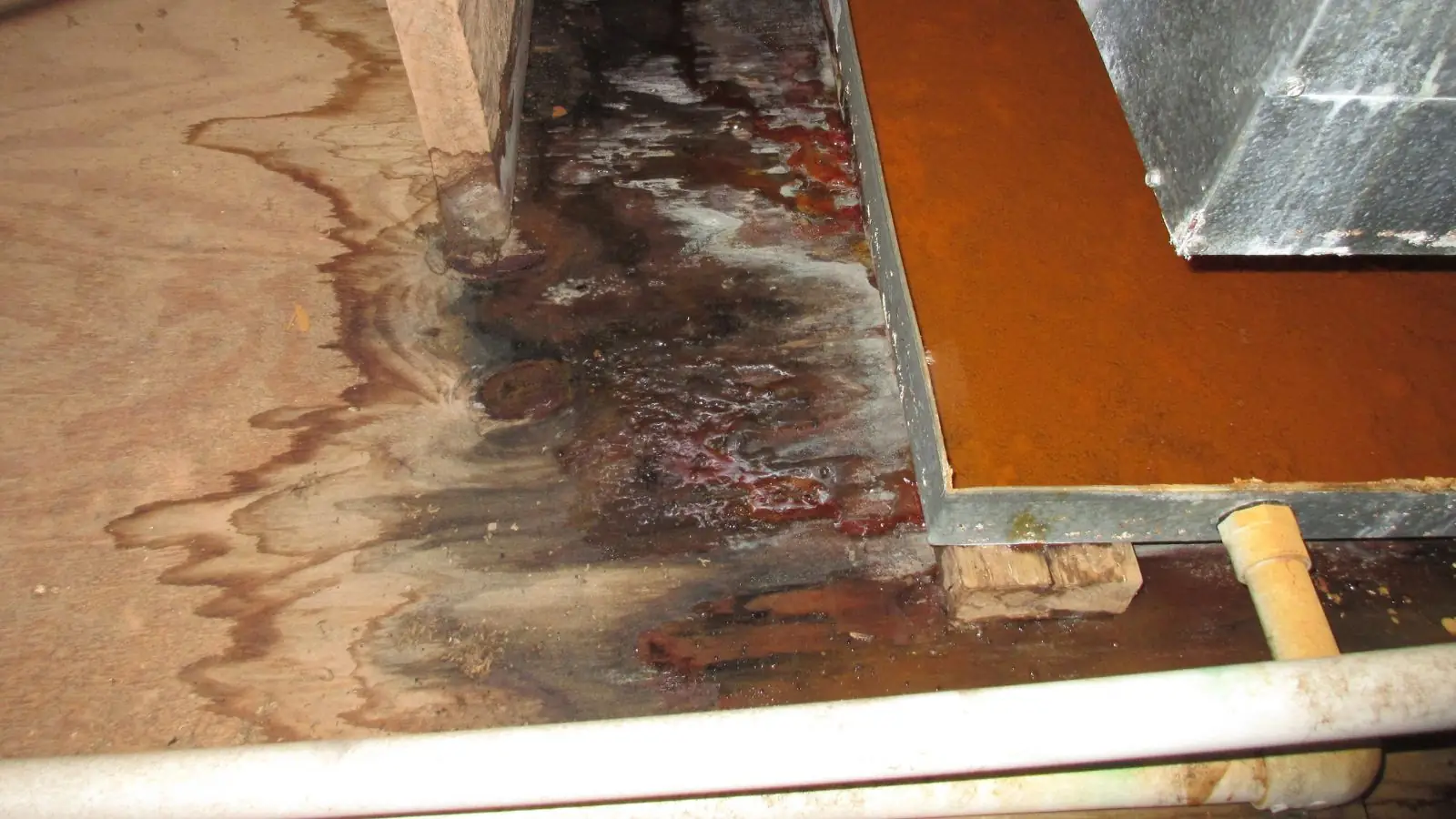
To fix a water damaged hardwood floor, stop the source, remove standing water, then dry the boards slowly and completely before deciding what to repair. The first 48 hours matter most. Wood absorbs water through the edges and underside, so a floor that looks fine on top can be wet underneath.
Do not sand or refinish while the wood is wet, and do not blast it with heat. Both make things worse. Many floors that cup after a leak flatten again once the moisture leaves, and the repair decision comes after drying, not before.
What water does to hardwood
Wood is made of cells that swell when they take on water. Boards swell across their width, push against neighbors and try to rise at the edges. That edge lift is called cupping, and the board looks like a shallow tray. Crowning is the opposite, where the center rises higher than the edges, and it usually shows up after a cupped floor was sanded flat while still damp.
Other signs include gaps between boards, a white or dark stain on the finish, a musty smell, finish that clouds or peels, and boards that buckle off the subfloor. Buckling is the severe case and often means the floor needs more than drying.
The first 48 hours
Speed counts, but so does gentleness. Wet wood dried too fast can crack and split. Here is the sequence to follow.
Stop the water
Shut off the supply valve to the broken fixture, appliance or the whole house. Water that keeps arriving cannot be dried.
Remove standing water
Mop, towel or wet-vac the surface. A restoration crew uses extraction units for anything more than a thin film.
Lift everything off the floor
Move furniture, rugs and boxes. Put foil or plastic blocks under furniture legs you cannot move. Wet rugs trap water against the boards.
Start air movement
Run fans across the surface and open windows if the outside air is drier than the room. Run a dehumidifier in the space.
Photograph the damage
Take photos of the floor, the source and any damaged belongings before you clean up. Your insurer may ask.
Call for moisture readings
Boards can look dry while the wood and subfloor stay wet. A moisture meter gives real numbers.
What you can do and what to avoid
A homeowner can safely handle the first stage. Shut off water, mop, run fans and a dehumidifier, and lift furniture. These steps buy time and limit damage while you wait for a professional.
Keep these cautions in mind. Do not crank the thermostat or aim a space heater at the boards, because fast heat splits wood.
Do not sand wet wood, because the surface planes down unevenly as the boards shrink back. Do not tape plastic over the floor and walk away, since sealed plastic traps moisture. Do not use a steam cleaner. If the water came from a sewer line or toilet backup, stay off the floor altogether.
What professionals do differently
Crews map the wet area with moisture meters and a thermal imaging camera, then set air movers and LGR dehumidifiers to pull moisture out slowly. On a floor with a hard finish, they may use drying mats or injection systems that pull air through the board seams and underneath. Drying typically takes several days to a couple of weeks, depending on the species, thickness, water category and how long the floor was wet.
That whole stage is water mitigation, and it is the single biggest factor in whether you keep the floor. If the boards dry flat, the work may end at a light screen and recoat. If they stay cupped, repair comes after the readings settle.
| Floor condition | What it suggests | Usual next step |
|---|---|---|
| Slight cupping, no gaps | Surface moisture, caught early | Dry slowly and recheck in a few weeks |
| Cupping with gaps | Moisture reached the board edges | Extended drying, then evaluate |
| Crowning | Sanded while damp or dried unevenly | Wait for equilibrium before sanding |
| Buckling or lifting | Heavy water or long exposure | Likely board or section replacement |
| Black staining or musty smell | Water sat for a while | Moisture inspection, possible mold work |
How long should you wait before repairing?
Wait until the wood and the subfloor read dry and stay that way. A rushed sanding job on damp wood will crown the floor or leave gaps when the boards shrink. Professionals usually want matching moisture readings across the floor and compared to an unaffected area before they sand.
Be patient with cupping. Boards often relax over several weeks. Ask the crew to recheck readings before you commit to a refinish, because the rest of the repair story belongs to water damage repair, where spot repair, replacement and finishing are decided.
Also keep in mind that mold needs moisture. If boards stayed wet for more than about 48 hours, ask the crew to check the underside and subfloor. Mold testing and remediation follow ANSI/IICRC S520, and health questions go to a physician.
When to call a professional
Call if more than a small patch is wet, if water sat for a day or more, if the floor is on a slab or over a basement, if the boards are buckling, or if the water was not clean. Also call if you cannot get the humidity down or cannot tell whether the subfloor is wet. Crews work in neighboring Winchester and Medford as well, and scope and price are explained before work starts.
Costs for hardwood depend on the water category, the area affected, the species and thickness of the boards, how many days of drying equipment run, and how much rebuild follows.
Stoneham leaks and the shutoff valve
Stoneham is fully served by the MWRA, and water reaches homes through town mains maintained by Stoneham Public Works. Floor damage in a house most often starts inside it, with a supply line, dishwasher, washer hose or water heater, so find your home's main shutoff valve before you need it. If the leak is on the street side of your meter, call Public Works instead, and after hours the town's page directs emergencies to the Stoneham Police Department line.
If drying exposes subfloor damage that needs rebuilding, ask the Stoneham Building Department at 35 Central Street whether your project needs a permit.
Frequently asked questions
Will cupped hardwood go back to normal?
Often it does, if the source is stopped and the boards dry slowly and completely. Mild cupping can flatten over weeks. Severe cupping, buckling or repeated wetting may not recover and may need replacement. Wait for moisture readings before judging, and do not sand until the wood and subfloor are at stable, normal levels.
Can I use a heater to dry my hardwood floor faster?
No. Direct heat dries the top of the boards faster than the bottom, which can crack the wood and open gaps. Controlled drying uses air movers and dehumidifiers that remove moisture steadily. A fan and a household dehumidifier are fine to start with while you arrange a professional assessment.
How do I know if the subfloor is wet?
You usually cannot tell by looking. A moisture meter reads the boards, and a professional may use additional methods to check the subfloor below. Signs include persistent cupping, a musty odor or boards that feel cool and damp. If the floor sits over a basement, check the ceiling below for staining.
Does homeowners insurance cover a water damaged hardwood floor?
It depends on your policy and the cause. Sudden and accidental water damage is often covered, while gradual leaks and neglect often are not, and flood damage usually needs separate flood coverage. Check your policy, take photos, keep receipts and ask your insurer before you replace anything.
Who should I call first in Stoneham if my floor is wet and I do not know why?
Shut off your home's main valve to see if the leak stops. If it stops, the problem is inside the house, so call a plumber and a restoration crew. If water keeps rising or comes from the street, call Stoneham Public Works, or the Police Department line after hours.
If your floor is wet now, call (339) 333-9345 and describe the source and how long the water has been there.