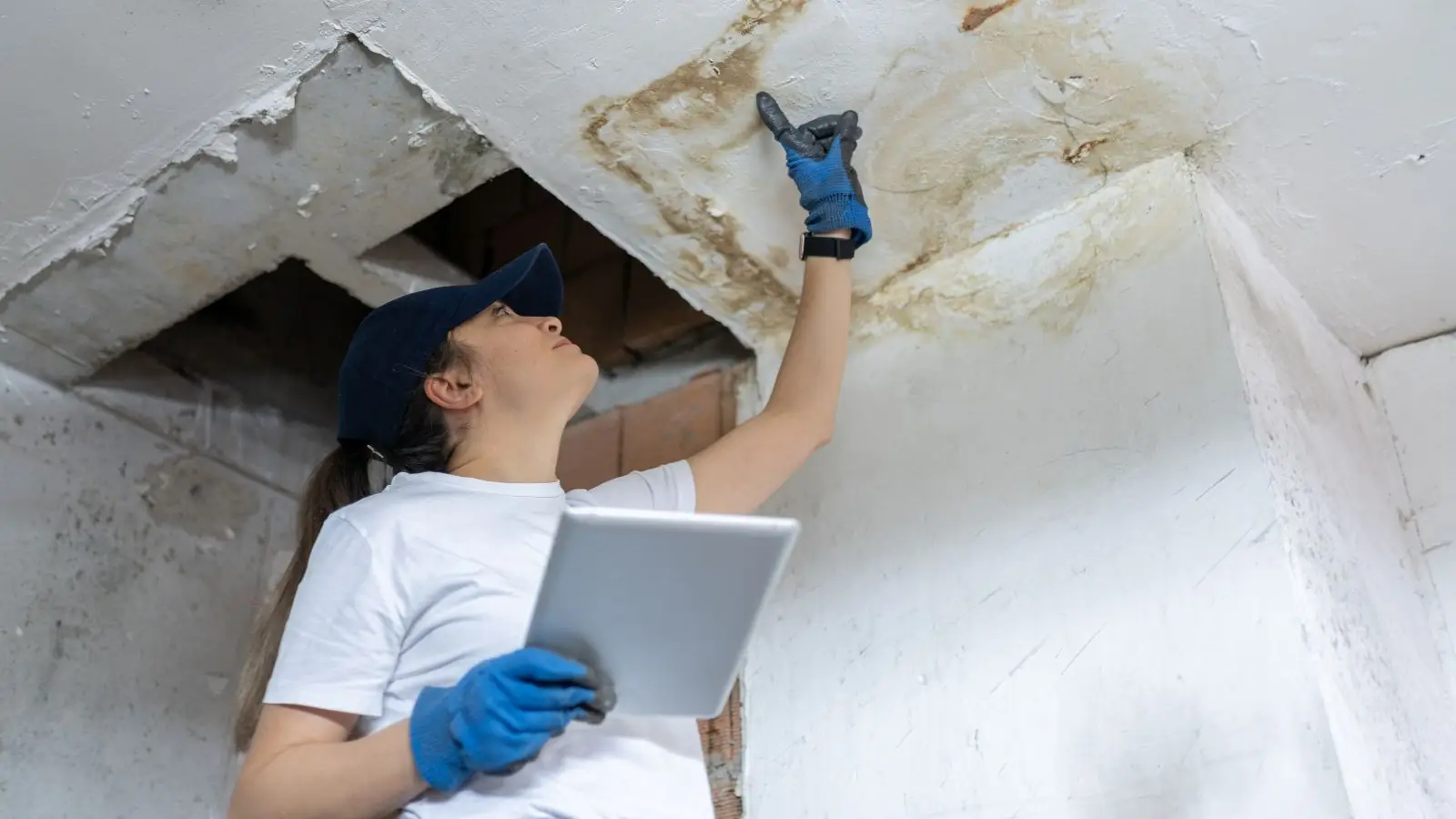
Sometimes, and it depends on how the water got in. Homeowners policies often cover sudden and accidental water damage, such as a burst pipe or a failed washing machine hose. They often do not cover slow leaks, neglected maintenance or flooding from outside. Sewer or drain backup is frequently a separate add-on. Your policy wording decides, so read it and ask your insurer before you assume either way.
Sudden and accidental versus gradual
This is the line most claims turn on. Sudden and accidental means something broke or failed on a specific day: a supply line split, a pipe froze and burst, a dishwasher hose let go. The damage shows up fast and the cause is clear.
Gradual means water escaped slowly over weeks or months, such as a drip under a sink, a weeping fitting or a window seal that kept leaking. Policies commonly treat that as a maintenance issue. If a slow leak is discovered during a sudden event, the insurer may look closely at what was old and what was new.
What is often covered and what often is not
Every policy differs, so treat this table as a list of questions rather than answers.
| Situation | Often covered | Often not covered (ask your insurer) |
|---|---|---|
| Burst pipe or split supply line | Often covered when sudden | Damage from a leak that ran unnoticed for a long time |
| Appliance hose or valve failure | Often covered when sudden | Wear and tear on the appliance itself |
| Water from a roof leak after storm damage | Often covered when the roof was damaged suddenly | Leaks from an old, worn or neglected roof |
| Slow drip under a sink | Sometimes the resulting sudden damage | Gradual seepage, rot and long-term mold |
| Sewer or drain backup | Only if you added that coverage | Standard policies often exclude it |
| Rising water from outside or heavy storm flooding | Only with separate flood coverage | Usually excluded from homeowners policies |
| Groundwater seeping through a foundation | Rarely | Commonly excluded as surface or ground water |
Flood is a different risk
Flood damage means water from outside rising onto your property: overflowing rivers, storm surge, or surface water pouring across land. Homeowners policies usually exclude it, and it needs separate flood coverage. That is not a detail to sort out after the water arrives, because new flood policies commonly carry a waiting period.
If you want to know whether your address sits in a mapped flood area, check the FEMA flood map for your address. A mapped zone, or lack of one, does not tell you whether your policy covers a backup or a leak, but it helps you decide what extra coverage to ask about. For larger water events, our flood damage restoration page describes what the cleanup involves.
The sewer backup question
A basement floor drain that pushes up gray or brown water is not a pipe leak in the usual sense, and many policies treat it separately. Ask your insurer in plain words: does my policy cover water that backs up through a drain or sump? If the answer is no, find out whether an add-on exists. It is a short phone call that is far easier before a loss than after.
What to do the day damage appears
Your policy also expects you to protect the property. This is often called a duty to mitigate: take reasonable steps to prevent further damage once you know about it. Stopping the leak, shutting the water off and drying the structure are those steps, and reasonable emergency work to stop more damage is often part of what policies expect.
Make it safe
Stay out of water near electrical equipment. Call the utility or 911 for any electrical or gas risk first.
Stop the source
Shut off the water if it is a supply problem. Do not wait for an adjuster to do this.
Photograph and video everything
Take wide shots, close-ups of the water line, the source, damaged contents and serial numbers.
Call your insurer early
Report the loss, ask what they need and ask what emergency work they expect you to do.
Keep damaged items
Hold on to them until your insurer says otherwise, unless they are unsafe.
Call a restoration company
Drying should start quickly. Ask for a written scope and a drying log.
Documentation is your claim
A claim is easier to support when it is easy to see what happened. Keep a folder, paper or digital, with the photos, the date and time you noticed the water, the names of everyone you spoke to, and every written scope or invoice. A drying log from the restoration company, which records daily moisture readings and equipment, shows what was wet and when it was dry.
Keep receipts for emergency steps such as plumbing repair, equipment or temporary lodging if the home is unlivable. Ask your insurer which of those it expects to see.
Deductible and limits in general terms
Most policies have a deductible, the part of a covered loss you pay before the insurer pays. A small repair can come in below that amount, which is one reason people sometimes decide not to file. Policies also have limits for certain categories of loss, and some pay damaged items at replacement cost while others pay a depreciated value. Your declarations page and policy wording show which applies to you.
This page cannot tell you whether a specific claim will be approved or what it will pay. Only your insurer can do that.
Flooding is a separate risk in Stoneham
FEMA declaration FEMA-1895-DR covered the severe storms and flooding that began in Massachusetts in March 2010, and it designated Middlesex County, which includes Stoneham, for Individual Assistance. It is a reminder that area-wide flooding happens and is treated separately from a burst pipe in your kitchen. Before you rely on a standard homeowners policy for a flooded basement, check the FEMA flood map for your address and ask your insurer whether any flood or backup coverage is in place.
Mistakes that weaken a claim
Waiting is the big one. Water that sits becomes a larger loss, and an insurer may question damage that grew because nothing was done. The second is throwing away evidence before photographing it. The third is making permanent repairs before anyone has documented the damage.
You should also avoid guessing about cause. Tell your insurer what you saw, not what you think the policy says.
When to call a restoration professional
Call as soon as you can, even before the adjuster arrives, because drying should not wait on paperwork. Emergency work to dry the structure and a written scope help show what was damaged. If you want the cleanup stage explained, see our water damage cleanup page, or call (339) 333-9345. The work is done by licensed and insured restoration professionals, and the scope and price are explained before work starts.
We serve Medford and Melrose as well, so neighbors on the same storm day can reach the same line.
Frequently asked questions
Does homeowners insurance cover a burst pipe?
Often yes, when the break was sudden and accidental. Coverage usually applies to the resulting water damage. It may not cover the pipe itself or a pipe that failed from neglect. Confirm with your insurer and ask what it expects you to do to protect the home in the meantime.
Is a slow leak covered?
Often not. Gradual seepage, rot and long-term moisture are commonly treated as maintenance problems and excluded. If a slow leak turns sudden, such as a pipe finally splitting, the sudden damage may be treated differently. Report it promptly and let the insurer decide.
Does flood insurance come with my homeowners policy?
Usually not. Flood damage is typically excluded from homeowners policies and needs its own coverage. Check your policy, ask your insurer or agent, and check the FEMA flood map for your address so you know what questions to ask.
What if my basement backs up from a drain?
Sewer or drain backup is often an add-on rather than standard coverage. Ask your insurer whether you have it, and photograph the water and the drain before cleanup. Treat the water as contaminated and keep people and pets away until professionals have handled it.
Does the FEMA disaster declaration for Middlesex County mean my claim is covered?
No. FEMA-1895-DR from March 2010 shows that Stoneham sits in a county that has seen declared flooding, but a declaration does not change what your own policy covers. Use it as a prompt to review your flood and backup coverage with your insurer today.