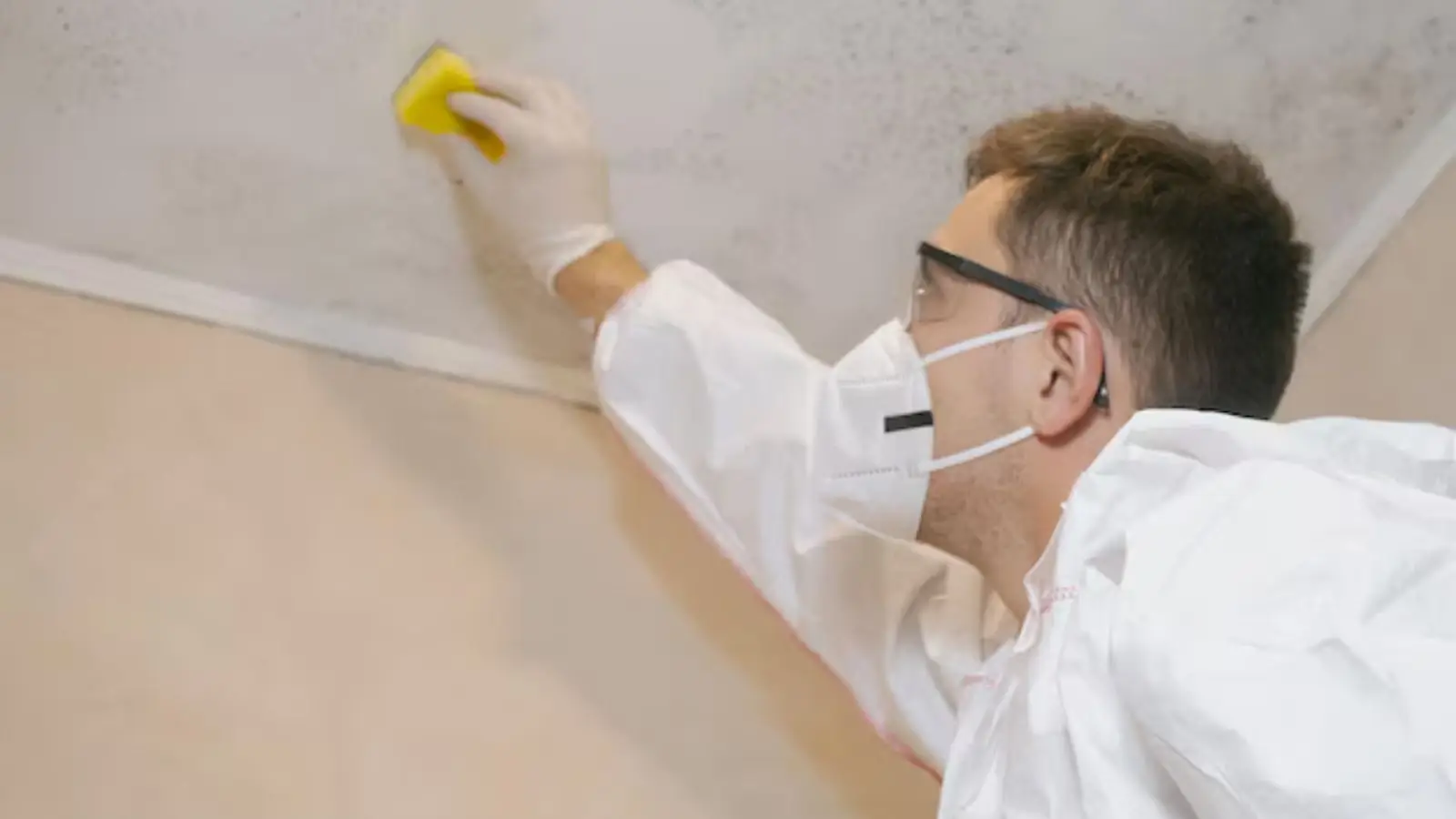
A dark patch on a ceiling is not always mold, and you cannot tell by looking. Dirt, soot, water stains and mold can look alike from the floor. What you can say for certain is that a ceiling stays dry unless something wet is above or inside it. Mold needs moisture, so the useful question is not "what is this spot" but "where is the water coming from." Find that source and stop it first. Everything else follows from there.
Read the stain before you touch it
The shape and color of a ceiling stain often point to its cause. A brown ring with a darker edge usually means water arrived, spread, dried and arrived again. Dark speckling in a bathroom corner suggests steam and poor ventilation. A sagging bulge means water is pooled in the drywall right now, and that is a different problem than a dry stain.
Use a flashlight held flat against the ceiling to see texture. Raised paint, soft spots and peeling tape at the seams all show that moisture has been present for a while. Take photos with a coin or tape measure beside the stain so you can see whether it grows over the next few days.
| Ceiling stain pattern | Likely moisture source | First check |
|---|---|---|
| Brown ring, darker edge, repeating | Slow roof or flashing leak | Attic underside of the roof deck after rain |
| Stain directly under a bathroom | Toilet seal, supply line or tub drain | Dry the area, press a paper towel to the floor above |
| Stain near a hallway or closet with an air handler | AC condensate line backing up | Drain pan and the line's outlet |
| Dark speckles in a bathroom corner or ceiling edge | Steam with weak exhaust fan | Run the fan and see if it moves air |
| Stain along an exterior wall line | Siding, window or gutter overflow | Outside wall above the stain |
| Round wet spot that grows fast | Active supply or drain line leak | Water meter and shutoff valve |
Find the source above the stain
Water travels. A stain on your kitchen ceiling can come from a leak several feet away, because water follows joists, pipes and wiring before it drops. Start at the point directly above the stain and then widen the search.
Check what is above
Go to the room or attic over the stain. Look at the toilet base, tub edges, sink traps, supply lines and any appliance with a water connection.
Look at the roof underside
In the attic, use a flashlight to check the roof deck and insulation for dark streaks, damp insulation or daylight at flashing points.
Check the AC condensate line
If an air handler sits above the ceiling, look at the drain pan. A pan with standing water often means the condensate line is clogged.
Do a meter test
Turn off every fixture, then read your water meter and check again after an hour. A moving dial points to a leak in the supply side.
Photograph and mark
Outline the stain edge with pencil and date it. Growth after the leak is fixed means the material is still wet inside.
Why the leak gets fixed first
If you scrub a ceiling while the roof still leaks or a condensate line still drips, the spot returns because the cause never went away. Repairs come in order: stop the water, dry the materials, then deal with the growth. A plumber, roofer or HVAC technician handles the first step. Mold work comes after.
Drywall and ceiling insulation hold water like a sponge. Even when the surface feels dry, the back of the board can stay damp. Mold can begin growing on damp materials within about 48 hours, which is why a small leak left alone for weeks becomes a bigger job. Water damage repair covers the rebuild once the area is dry and the growth is dealt with.
Electrical and sagging ceilings
If a ceiling is bulging, dripping near a light fixture or wet around wiring, stay out of the room. Cut power only if you can reach the panel while standing dry. Call the utility or 911 for any electrical risk before calling a restoration line.
What counts as a small spot, and what does not
A spot smaller than a coin on a hard painted surface, with the leak fixed and the area dry, is something a homeowner may reasonably clean with detergent and water. A stain larger than roughly a square foot, or one on drywall, ceiling texture or insulation, falls into a different category. Porous materials cannot be cleaned back to sound, so they are usually cut out and replaced.
The industry reference here is ANSI/IICRC S520, the published standard for professional mold remediation. It covers containment, air filtration and how clearance is judged. When you compare bids, ask whether the crew's plan follows that standard. Professional mold remediation uses containment barriers, negative air and HEPA air scrubbers so disturbed material does not spread to other rooms.
When a test or inspection helps
A visual guess is not a diagnosis. If you are selling the home or a buyer's lender wants the issue resolved, an independent assessor can sample the area and run clearance testing after the work. Keep that tester separate from the company doing the remediation, so the result stands on its own. Questions about symptoms or health belong with a physician, not with a stain on a ceiling.
Water supply in Stoneham and your ceiling
Stoneham is fully served by the MWRA, and the town's Public Works Water/Sewer Department maintains about 75 miles of water mains and about 6,100 service connections. That network ends at your property line, so a leaking supply line above a ceiling is a question about your home's plumbing, not the street. Know where your home's main shutoff valve is and test that it turns, because it is the first thing to close when a pipe above a ceiling is active.
When to call a professional
Call when the stain is larger than a hand, the drywall is soft or sagging, the spot returned after a cleaning, or you cannot find the source. Describe the leak history: a recent toilet, sink, roof or condensate problem is useful information. The crew will use moisture meters and a thermal imaging camera to map wet areas before anything is opened, and scope and price are explained before work starts.
If the water came from a bathroom neighbor or a drain that backed up, sewage may be involved. Treat that as a separate hazard and keep out. Crews working in Melrose and Winchester deal with the same pattern: a modest leak that went unnoticed for weeks. Call (339) 333-9345 if you want someone to look at the area.
Frequently asked questions
Is a black ceiling stain always mold?
No. Soot, dirt, old water stains and mold can look alike, and you cannot confirm which by eye. What matters is whether moisture is present. If the area is damp, has repeated, or smells musty, treat it as a moisture problem first and have it assessed if it is larger than a small spot.
Can I paint over a dark ceiling stain?
Painting hides a stain but does not remove the cause or the material. If water is still reaching the ceiling, the stain comes back through the paint. Fix the leak, dry the ceiling, deal with any growth, and only then repaint with the area confirmed dry.
Should I test for mold before calling anyone?
Store kits give limited information. If you want testing, use an independent assessor who works to ANSI/IICRC S520, and ask whether your state licenses mold work. Testing matters most for a sale, a loan or a dispute, and less for a small spot you can see and trace.
Does homeowners insurance cover ceiling water damage?
Often, sudden and accidental water damage is covered and gradual leaks are not. Policies differ, so check your policy and ask your insurer. Take dated photos and keep repair receipts, since they show when the leak started and what you did about it.
Why does the stain show up far from my toilet or pipe?
Water follows joists and wiring before it drops through the ceiling. The visible stain may sit a room away from the actual leak. Start directly above the stain, then work outward, and use a moisture meter if you can borrow one.